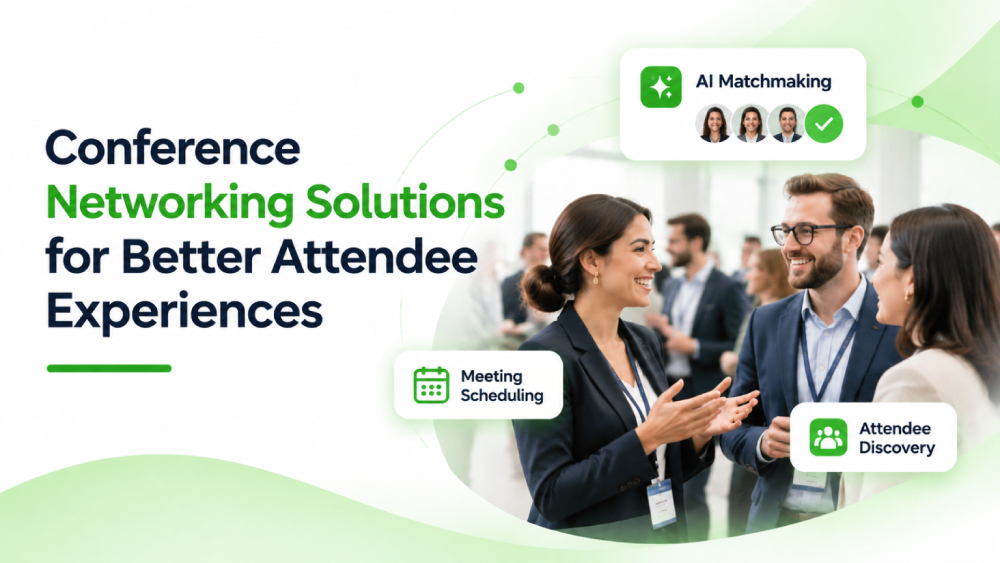
A successful conference is not defined only by its speakers, sessions, or attendance numbers. The quality of interactions between participants also plays an important role in creating a valuable event experience. Attendees want opportunities to meet relevant professionals, exchange ideas, explore partnerships, and develop relationships that continue beyond the conference.
However, bringing hundreds of professionals together does not automatically create meaningful connections. Without the right planning and technology, attendees may struggle to identify relevant people or find opportunities to interact.
Effective conference networking solutions help organizers overcome these challenges by making professional interactions more accessible, personalized, and engaging. From AI-powered matchmaking to structured networking activities, the right approach can improve the overall attendee experience.
Why Do Traditional Networking Approaches Need Improvement?
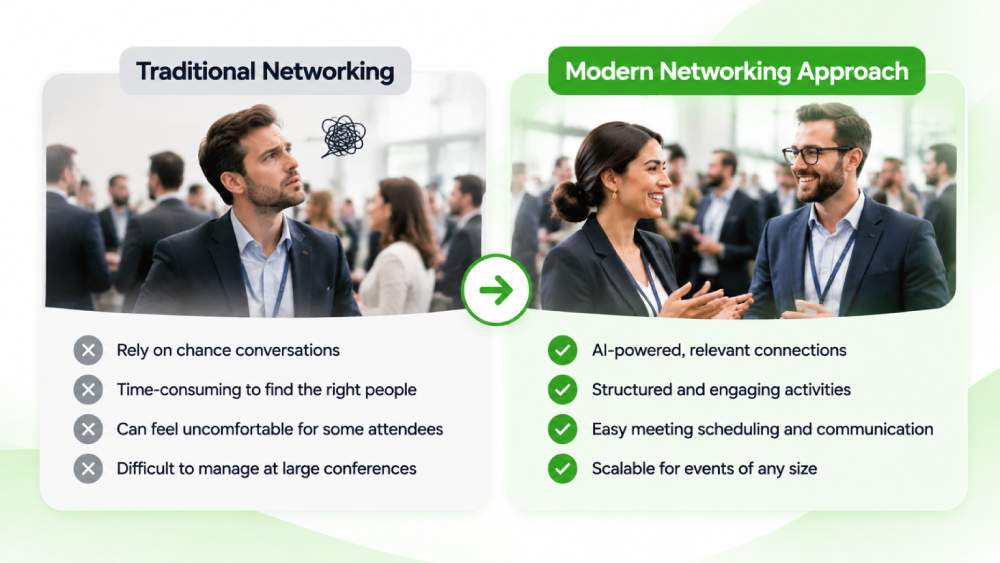
Traditional networking often depends on spontaneous conversations, business card exchanges, and informal introductions. Although these methods still have value, they do not always help attendees connect with the right people.
Participants may spend considerable time searching for relevant contacts, while others may feel uncomfortable initiating conversations. Large conferences also make it difficult for organizers to manage introductions manually.
Modern networking approaches address these limitations by combining structured activities with digital tools. They help participants discover relevant professionals, arrange meetings, and engage with others according to their interests.
AI-Powered Matchmaking for Relevant Connections
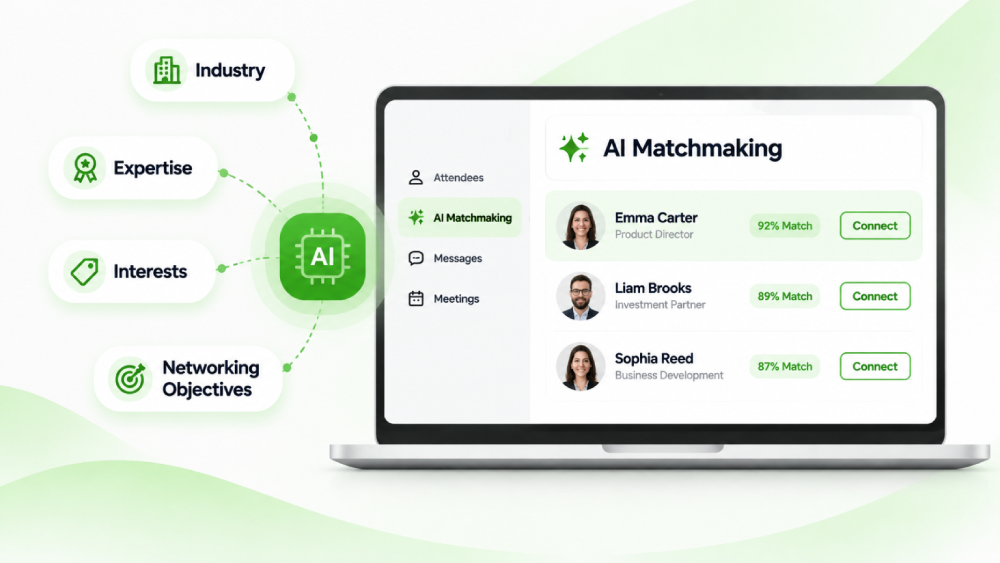
One of the most effective ways to improve networking is through intelligent matchmaking. Instead of allowing attendees to browse hundreds of profiles randomly, AI-powered systems can recommend professionals based on their industries, expertise, interests, and networking objectives.
These recommendations make it easier for participants to identify potential clients, collaborators, investors, and industry peers.
Platforms such as Netwoor AI use intelligent matchmaking capabilities to facilitate more relevant professional connections and improve how attendees discover networking opportunities.
Personalized recommendations can make networking more productive by reducing the time spent searching for suitable contacts.
Digital Platforms That Simplify Attendee Engagement
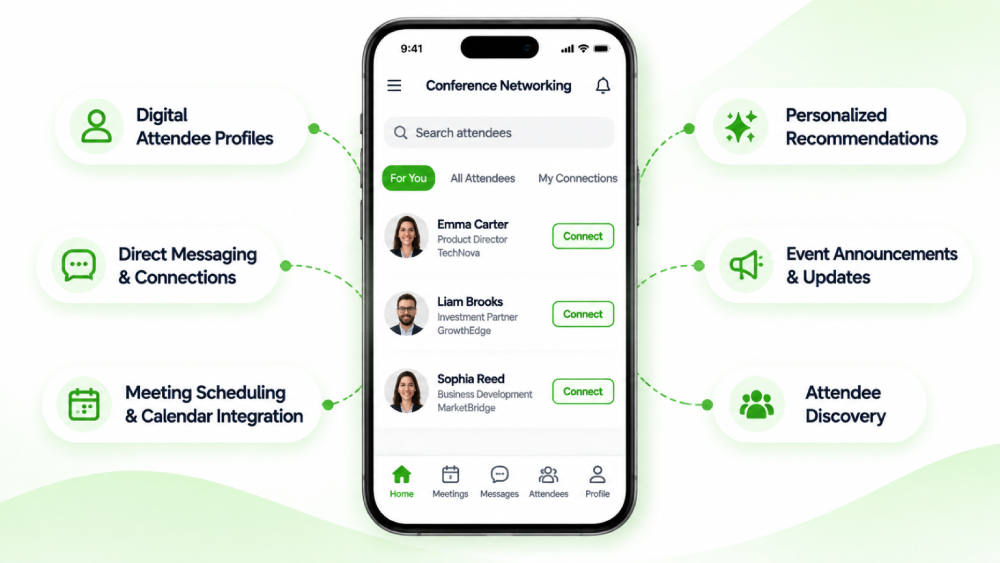
A dedicated conference networking app can bring important networking activities into one accessible environment. Attendees can explore profiles, send connection requests, communicate with other participants, and arrange meetings.
Organizers should look for platforms offering features such as:
Digital attendee profiles with professional interests and company information.
Direct messaging and connection requests.
Meeting scheduling and calendar integration.
Personalized recommendations and attendee discovery.
Event announcements and networking notifications.
Having these features in one place reduces communication gaps and creates a smoother experience throughout the event.
Structured Activities That Encourage Interaction
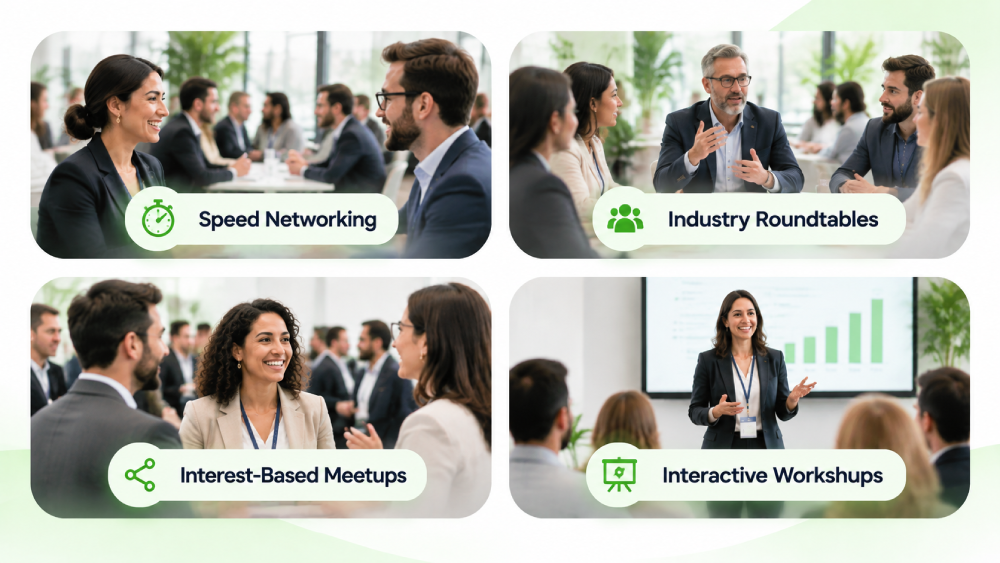
Technology is valuable, but face-to-face interaction remains essential. Organizers should introduce activities that encourage attendees to participate rather than wait for conversations to happen naturally.
Some effective networking activities for conferences include:
Speed networking: Short, timed conversations that allow participants to meet several professionals.
Industry roundtables: Small-group discussions focused on specific business or professional topics.
Interest-based meetups: Informal gatherings for attendees with shared interests and expertise.
Interactive workshops: Collaborative sessions where participants exchange ideas and solve problems together.
Choosing the Right Networking Technology
Not every event requires the same digital capabilities. Organizers should select technology according to event size, audience expectations, and networking objectives.
| Networking solution | Main purpose | Attendee benefit |
|---|---|---|
| AI matchmaking | Recommends relevant contacts | More meaningful connections |
| Digital profiles | Displays professional information | Easier attendee discovery |
| Meeting scheduling | Organizes networking meetings | Better time management |
| In-app messaging | Supports direct communication | Convenient interaction |
| Engagement analytics | Tracks networking activity | Improved event experience |
| Virtual networking | Connects remote participants | Greater accessibility |
A reliable conference networking platform should offer a simple interface, dependable performance, and features that support both attendees and organizers.
Make Networking Accessible for Every Attendee
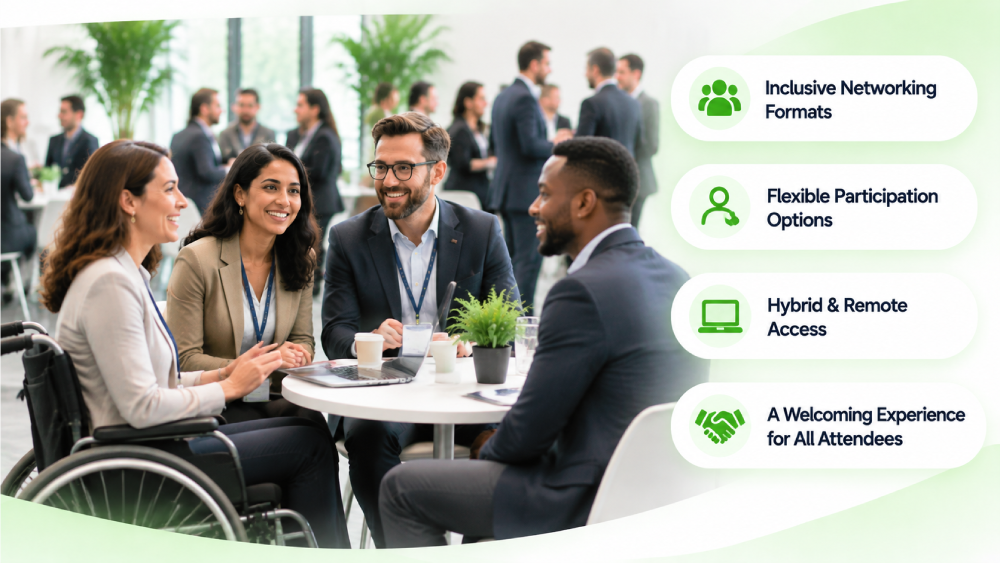
A positive networking experience should accommodate different personalities, professional backgrounds, and participation preferences.
Some attendees are comfortable approaching strangers, while others prefer scheduled introductions or smaller discussions. Providing different interaction formats makes networking more inclusive.
Organizers can improve accessibility by offering:
Clear instructions for using networking features.
Quiet networking spaces for smaller conversations.
Scheduled meetings for participants who prefer planned interactions.
Hybrid participation options for remote attendees.
Accessible digital interfaces across devices.
Use Analytics to Improve Future Networking Experiences
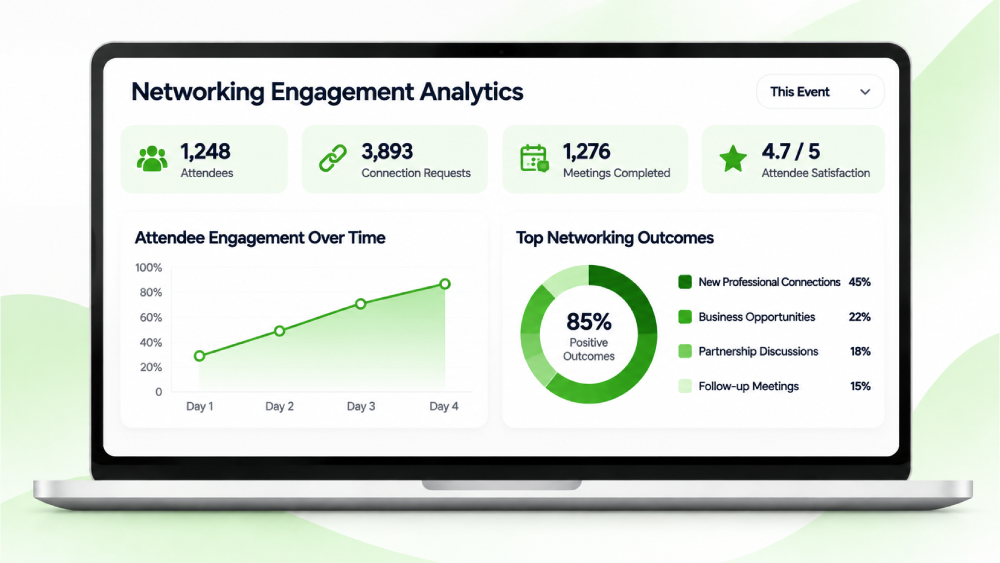
Understanding attendee engagement is essential for improving future conferences. Organizers should evaluate whether networking activities are generating meaningful interactions rather than focusing only on attendance figures.
Useful performance indicators include:
Number of connection requests and accepted connections.
Meetings scheduled and successfully completed.
Participation in networking sessions.
Attendee feedback and satisfaction.
Post-event collaborations and business opportunities.
Modern conference networking software can help collect and organize this information, giving organizers a clearer understanding of which activities deliver value.
Conclusion
Creating better attendee experiences requires more than bringing professionals together in one location. Organizers need to make connections easier, encourage participation, and provide opportunities for meaningful interactions.
By combining intelligent matchmaking, digital platforms, structured activities, and engagement analytics, conference networking solutions can transform how attendees experience professional events.
Frequently Asked Questions
1. What makes a conference networking experience successful?
Relevant connections, engaging activities, accessible technology, and meaningful conversations.
2. Can networking solutions improve attendee retention?
Yes. Positive networking experiences can encourage attendees to return to future events.
3. Are networking platforms useful for small conferences?
Yes. Even smaller events can benefit from attendee discovery, messaging, and meeting scheduling.
4. How can organizers encourage more networking participation?
Offer structured activities, personalized introductions, and easy-to-use digital networking features.
Get the next article in your inbox
Stay updated with practical insights, product updates, and networking tips — delivered straight to your inbox.