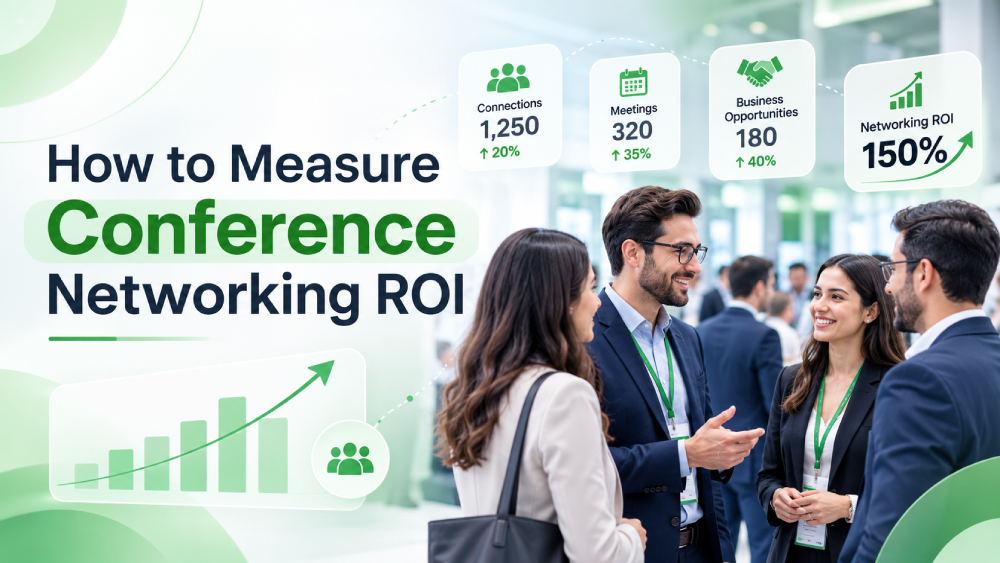
Conferences bring together business leaders, industry experts, entrepreneurs, investors, and professionals to exchange ideas and explore new opportunities. While organizations often measure event success through attendance, registrations, and ticket sales, the value of professional connections is equally important.
Measuring conference networking ROI helps event organizers understand whether their networking activities are delivering meaningful results. It reveals how effectively an event connects attendees, generates business opportunities, encourages collaboration, and builds long-term professional relationships.
How to Measure Conference Networking ROI?
Here are seven practical ways to measure networking return on investment.
1. Define Clear Networking Objectives

Before measuring results, establish what successful networking means for your event. Different conferences have different objectives. A startup event may focus on investor connections, while a technology conference may prioritize partnerships, knowledge exchange, and business development.
Set measurable objectives such as:
Number of professional connections established.
Number of meetings arranged between relevant participants.
Potential business partnerships generated.
Qualified leads identified during the event.
Attendee satisfaction with networking opportunities.
Clear objectives provide a foundation for evaluating conference networking strategies and determining whether the event achieved its intended outcomes.
2. Track the Number of Meaningful Connections
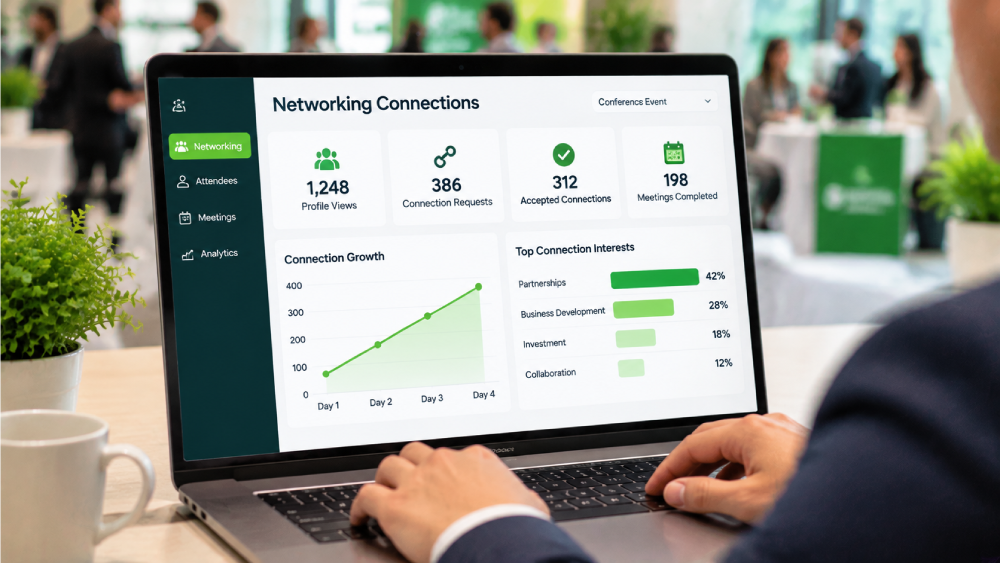
Attendance figures do not necessarily reflect networking success. An event with 1,000 participants may generate fewer valuable connections than a smaller gathering with carefully matched attendees.
Track how many connections participants establish and distinguish meaningful interactions from simple contact exchanges.
For example, organizers can measure profile interactions, connection requests, accepted invitations, and meetings completed during the event.
Using conference networking tools makes it easier to collect this information and understand how actively participants engage with one another.
However, connection quantity should always be considered alongside quality. A smaller number of relevant connections may produce greater long-term value.
3. Measure Meetings and Business Opportunities
Scheduled meetings are an important indicator of networking effectiveness. They demonstrate whether attendees are finding relevant professionals and taking steps toward potential collaborations.
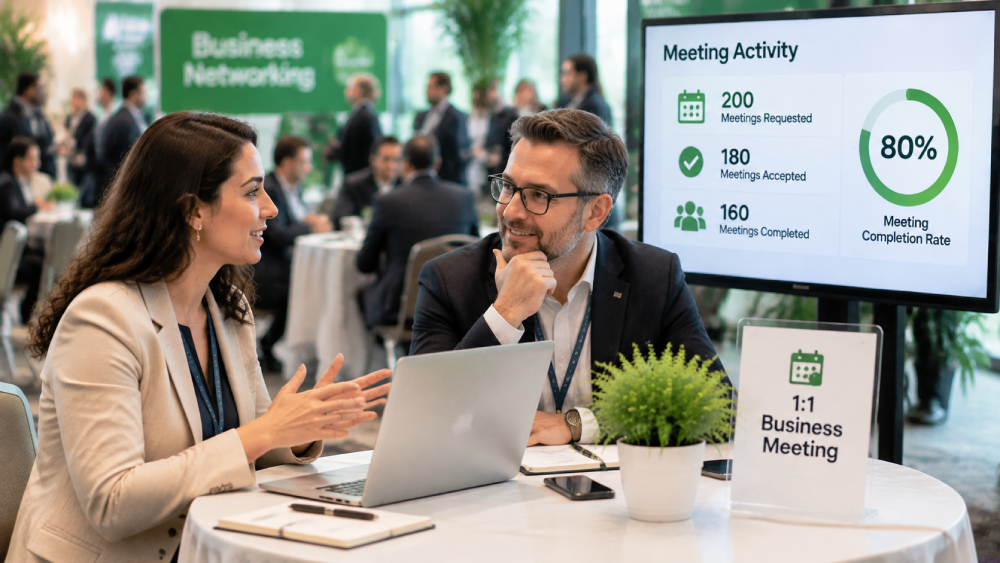
Track the number of meetings requested, accepted, scheduled, and completed. You can also ask participants whether these discussions resulted in potential partnerships, sales conversations, investment opportunities, or professional collaborations.
A dedicated event networking platform can simplify meeting management and provide useful engagement data.
For example, if 200 meetings are scheduled and 160 are completed, organizers can calculate an 80% meeting completion rate.
This provides a clearer picture of how effectively the event facilitates professional interactions.
4. Evaluate Lead Generation and Business Conversions
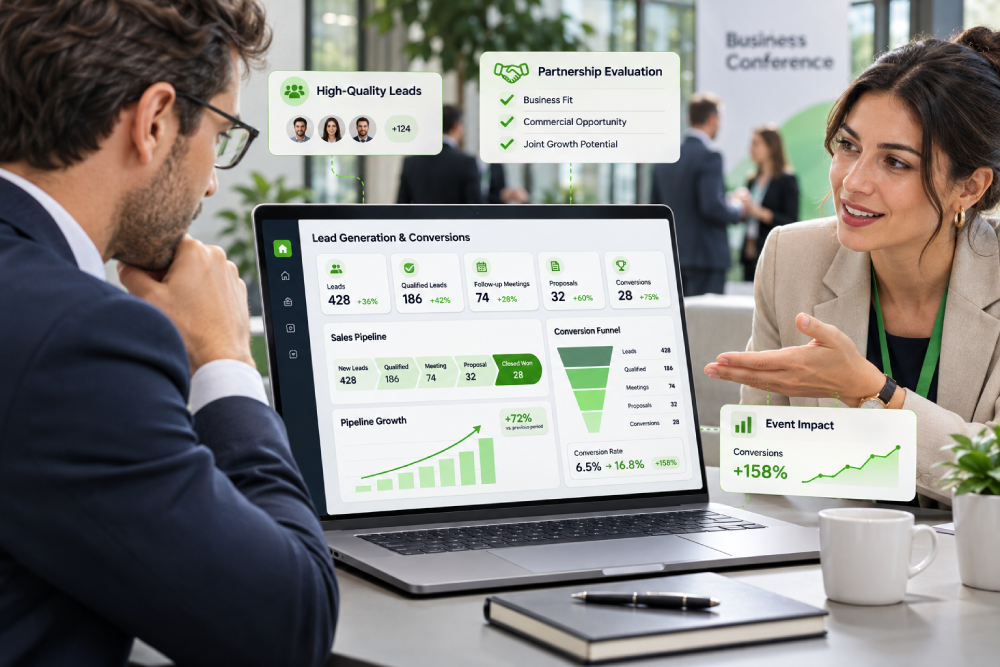
For business-focused events, networking success often translates into measurable commercial opportunities.
Track the number of qualified leads generated, follow-up meetings arranged, proposals requested, and deals eventually closed.
However, not every lead converts immediately. Some professional relationships require several conversations before producing business results.
Establish a follow-up tracking period, such as 30, 60, or 90 days, to evaluate how connections develop after the event.
These indicators help organizations understand the commercial contribution of professional conference networking and distinguish immediate results from longer-term opportunities.
5. Collect Attendee Feedback
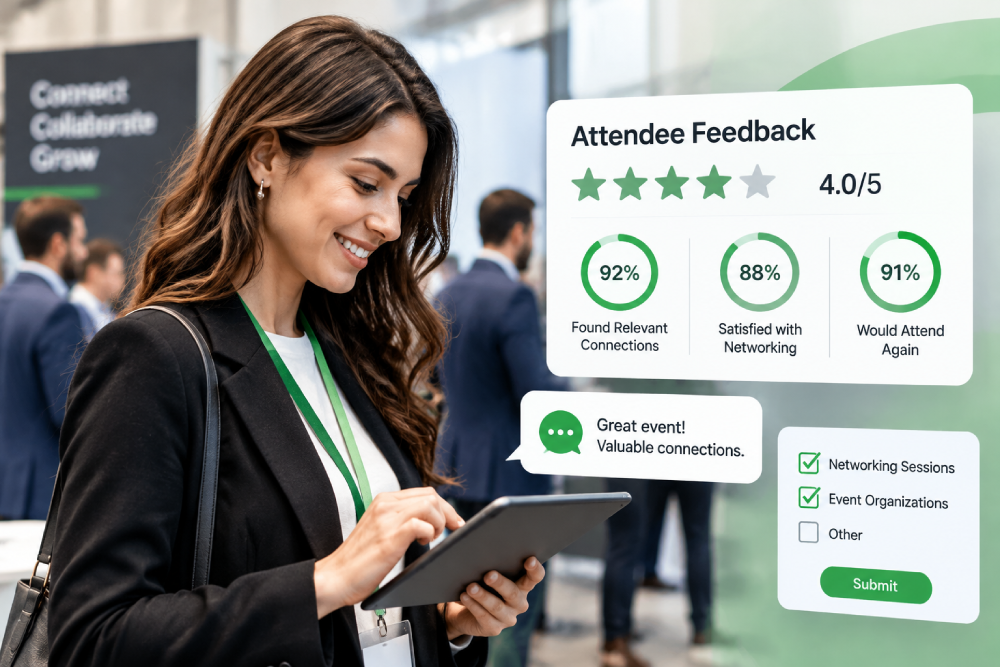
Quantitative data explains what happened, but attendee feedback helps organizers understand why certain networking activities worked or failed.
Send short post-event surveys asking participants about their networking experience. Useful questions include:
Did you meet professionals relevant to your goals?
Were the networking sessions useful?
Did you find it easy to identify relevant attendees?
Would you participate in similar networking activities again?
A conference networking app can also collect feedback and engagement information through digital surveys and in-event interactions.
Compare feedback across different sessions to identify which activities generated the most value and where improvements are needed.
6. Use Technology to Calculate Networking Performance
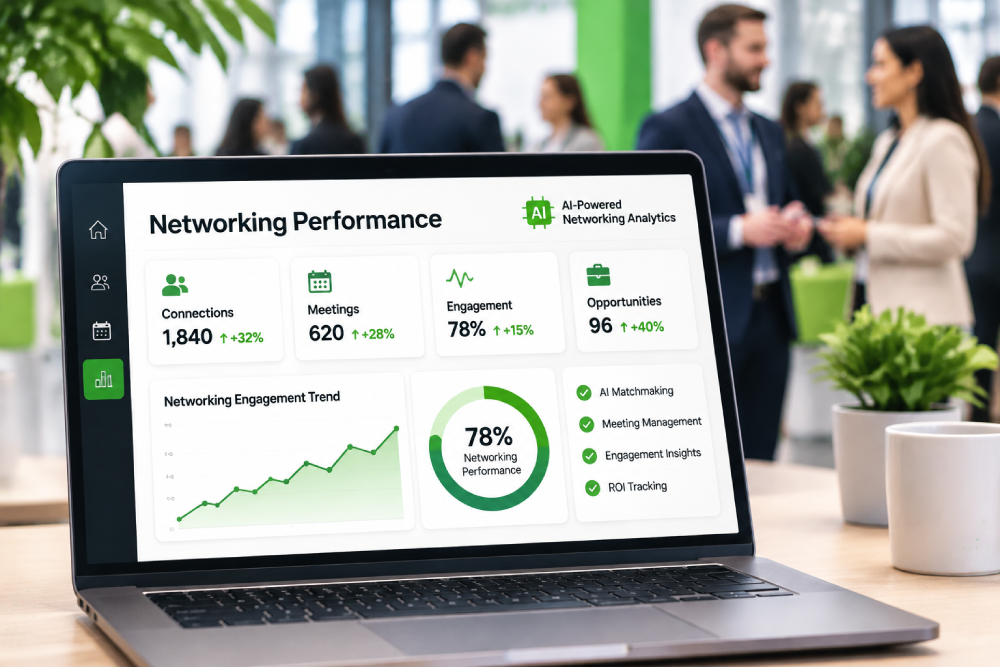
Manually tracking every interaction at a large conference can be challenging. Modern networking technology provides organizers with better visibility into attendee engagement, meeting activity, and connection outcomes.
AI-powered platforms can recommend relevant participants, facilitate introductions, and provide insights into networking performance.
For example, Netwoorking AI uses intelligent matchmaking to help participants discover relevant connections and improve professional networking experiences.
These capabilities can support more informed decisions about conference networking management, helping organizers understand whether their event design is encouraging meaningful interactions.
7. Calculate Networking ROI
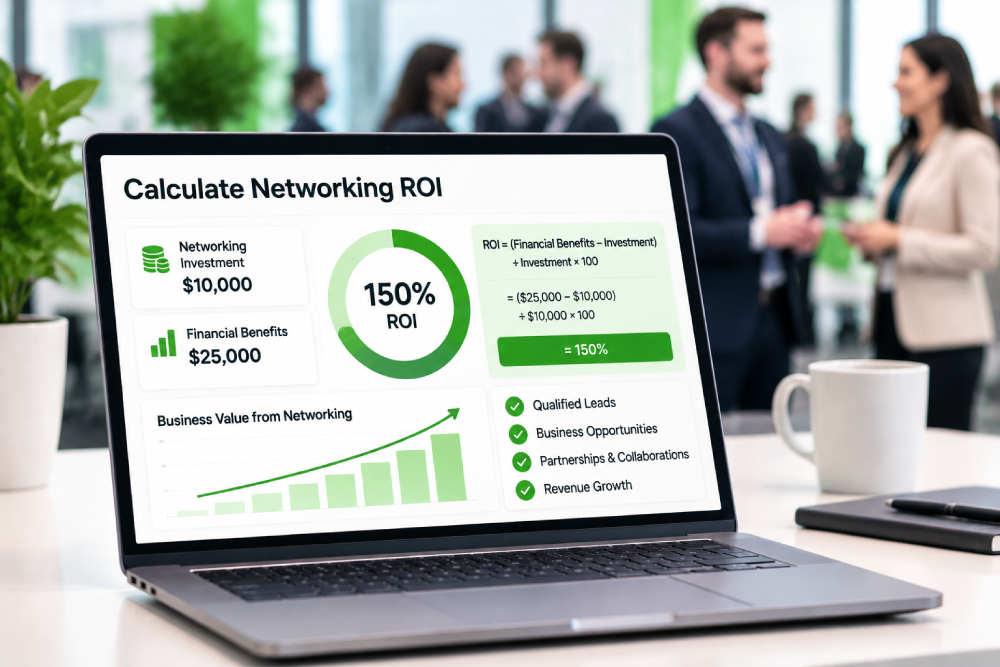
Once you have collected the necessary data, calculate the financial return generated through networking activities.
A commonly used ROI formula is:
Networking ROI = [(Financial Benefits − Networking Investment) ÷ Networking Investment] × 100
For example, suppose an organization invests $10,000 in networking activities and generates $25,000 in attributable business revenue.
ROI = [($25,000 − $10,000) ÷ $10,000] × 100
Networking ROI = 150%
This means the networking investment generated a 150% return.
Remember to include relevant costs, such as networking technology, dedicated staff, matchmaking services, and activity arrangements. Also, distinguish revenue directly attributable to conference connections from revenue that may have occurred independently.
Conclusion
Measuring conference networking ROI requires more than counting attendees or collecting business cards. Organizers need to evaluate connection quality, completed meetings, business opportunities, attendee satisfaction, and financial outcomes.
Combining measurable performance indicators with attendee feedback and intelligent networking technology provides a more complete understanding of event success. By tracking these results consistently, organizers can improve future conferences, create better networking experiences, and demonstrate the business value of their events.
Frequently Asked Questions
1. What is a good networking ROI for a conference?
There is no universal benchmark. A positive ROI indicates that measurable financial benefits exceed networking investment.
2. How long should organizers track networking results?
Track immediate engagement and continue monitoring business outcomes for at least 30–90 days.
3. What is the difference between networking ROI and event ROI?
Networking ROI measures the value generated through professional connections, while event ROI covers the overall financial performance of the event.
4. Can networking success be measured without revenue?
Yes. Connection quality, completed meetings, attendee satisfaction, and collaboration opportunities are useful non-financial indicators.
Get the next article in your inbox
Stay updated with practical insights, product updates, and networking tips — delivered straight to your inbox.