

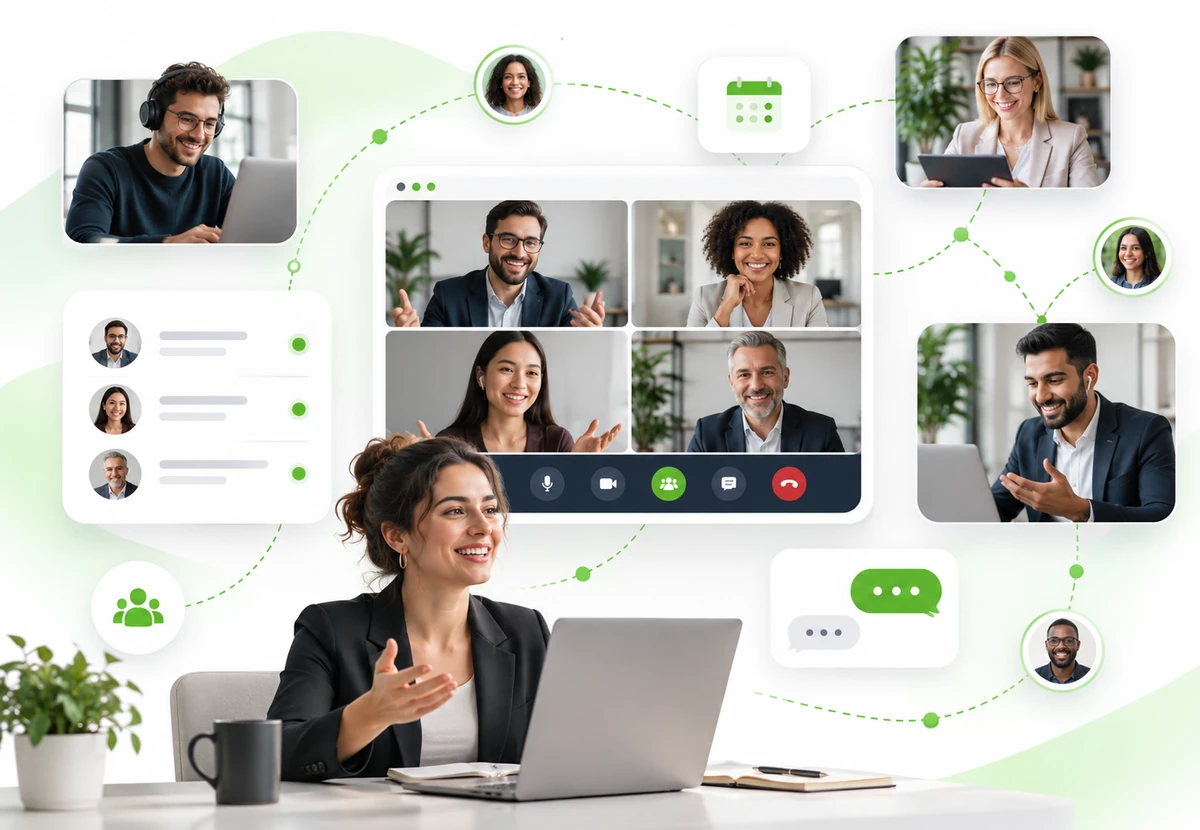
Professional networking has traditionally depended on physical meetings, conferences, business gatherings, and industry events. However, digital communication has introduced another way for people to build relationships without being in the same location.
Virtual networking events bring professionals together through online platforms, allowing them to exchange ideas, discuss industry developments, and explore business opportunities remotely. Understanding how virtual networking events work can help professionals and organizers make better use of digital networking experiences.
What Are Virtual Networking Events?
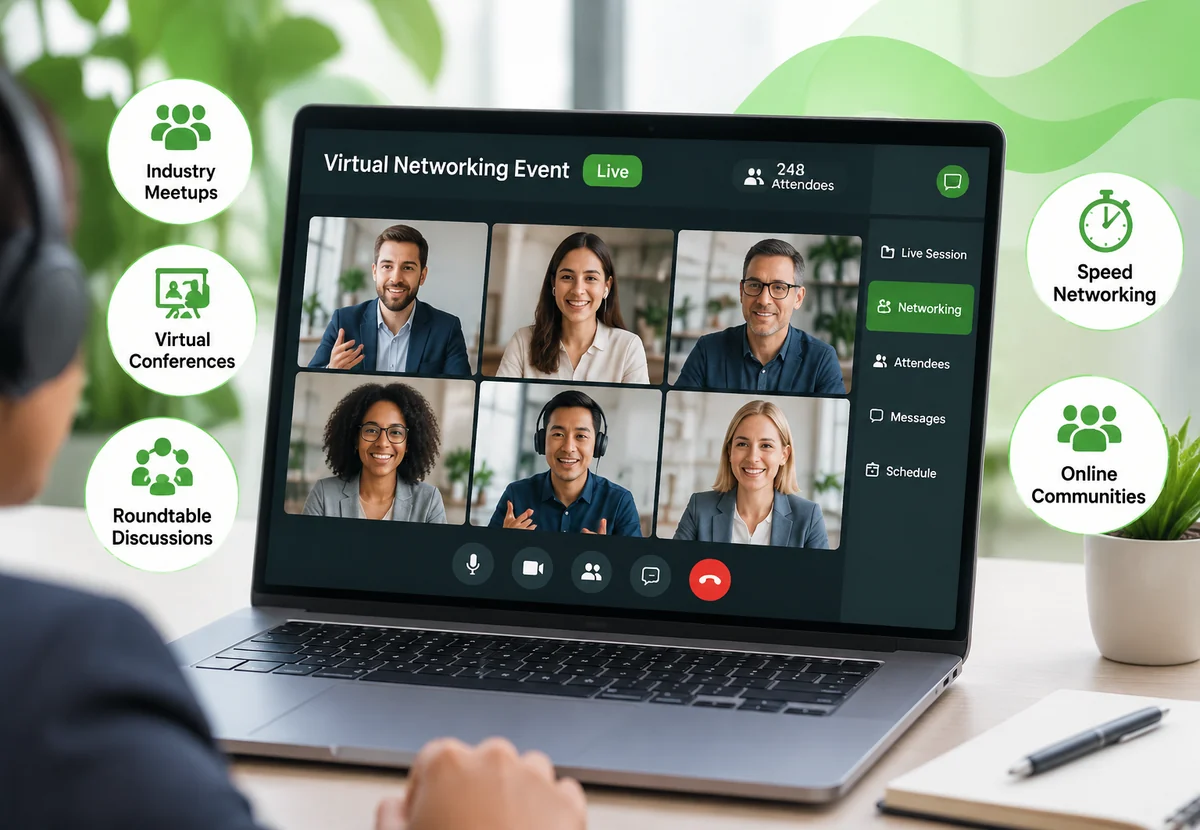
Virtual networking events are online gatherings designed to help people establish professional connections through digital communication tools.
Participants usually join through a web-based platform or application where they can access discussions, video meetings, attendee profiles, and networking sessions.
Common formats include:
Online industry meetups.
Virtual business conferences.
Digital roundtable discussions.
Remote speed networking sessions.
Online professional communities.
Unlike traditional events, these gatherings do not require participants to travel to a physical venue.
How Do Virtual Networking Events Work?
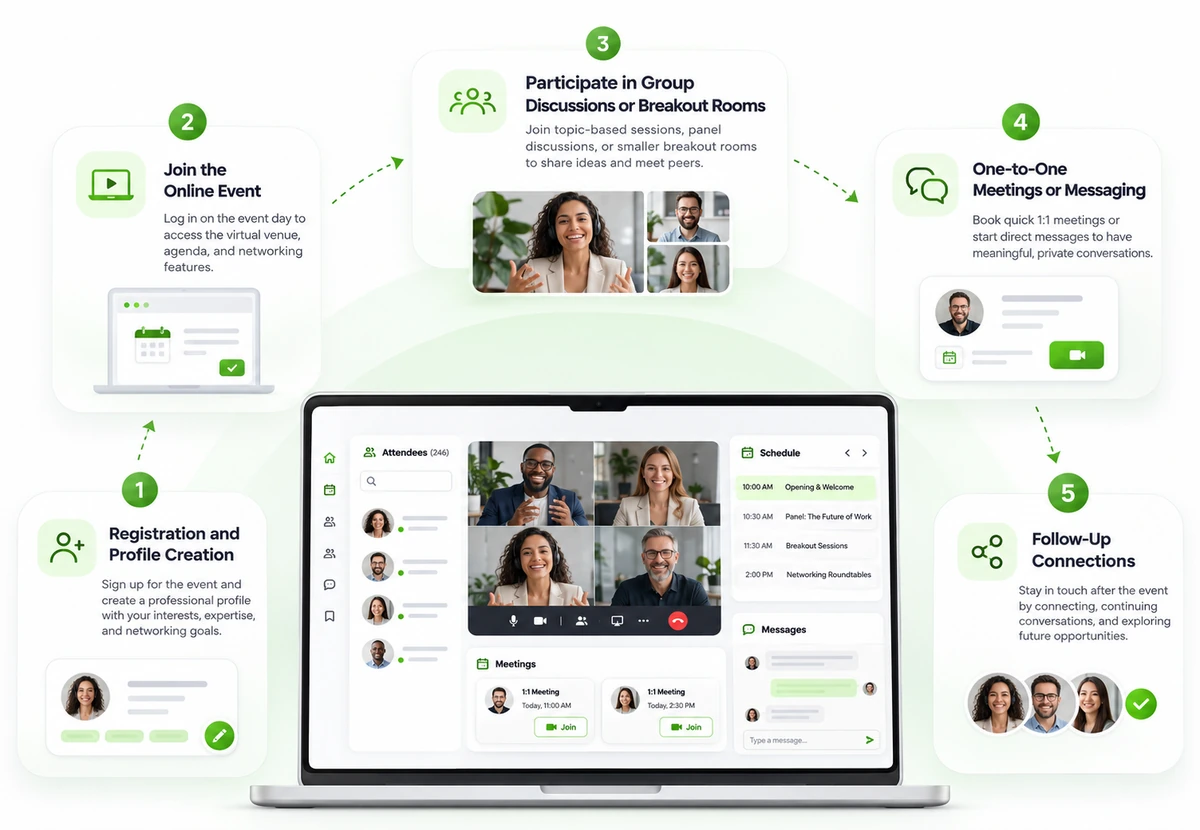
Most virtual networking experiences follow a structured process.
First, participants register and create profiles containing their professional information. Organizers may collect details about industries, interests, and networking objectives.
Next, attendees join the event through an online platform. Depending on the format, they may participate in live sessions, group discussions, one-to-one meetings, or messaging activities.
The following table explains common virtual networking formats:
| Event format | How it works | Main benefit |
|---|---|---|
| Video networking | Participants meet through video calls | Direct interaction |
| Virtual roundtables | Small groups discuss specific topics | Knowledge exchange |
| Online speed networking | Short scheduled meetings | More introductions |
| Digital communities | Members interact in online groups | Ongoing relationships |
| Virtual exhibitions | Attendees explore digital exhibitor spaces | Business discovery |
Benefits of Virtual Networking Events
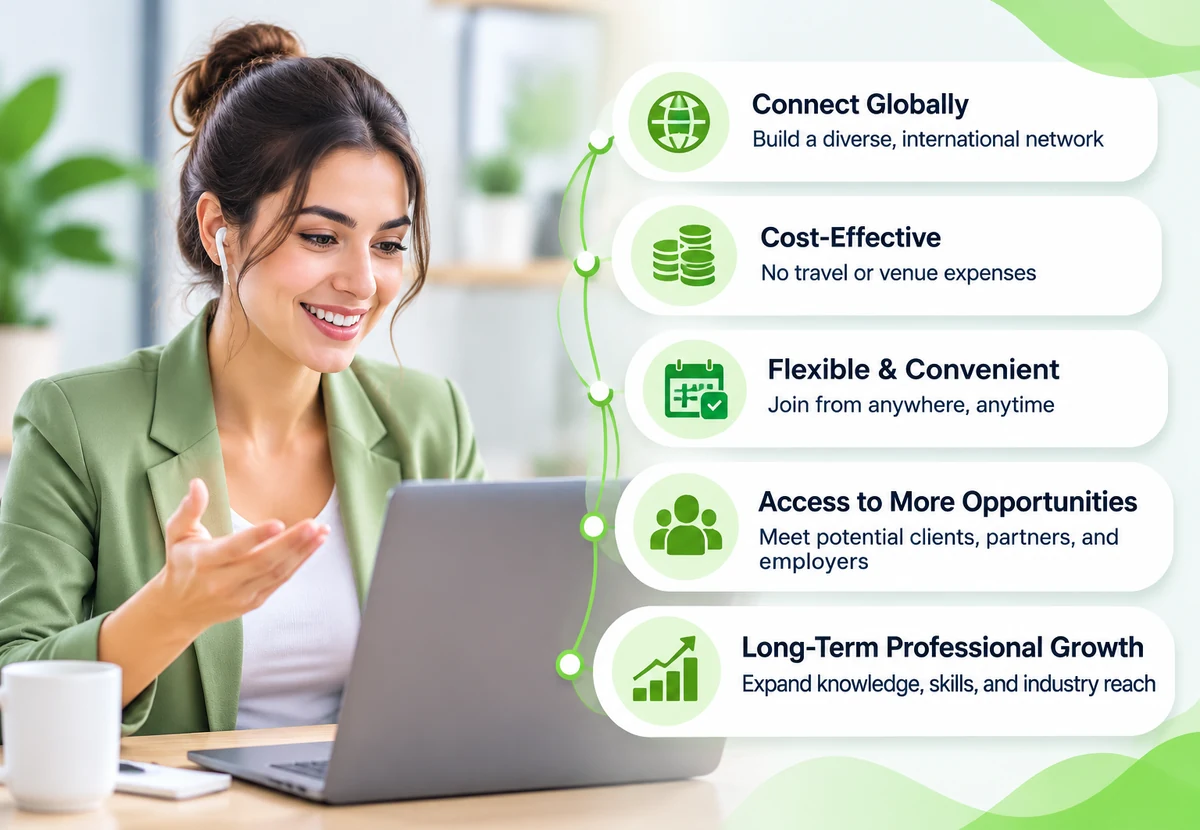
1. Wider Audience Reach
Virtual events allow organizers to attract participants from different cities and countries. Attendees can connect with professionals they might not otherwise meet.
2. Reduced Travel Requirements
Participants can join from their homes or workplaces without spending time and money traveling to event locations.
3. Flexible Participation
Online sessions can offer different time slots, recorded content, and multiple interaction formats, depending on the platform.
4. Better Digital Engagement
Some platforms provide tools for attendee discovery, messaging, meeting scheduling, and engagement tracking.
5. Continuous Networking Opportunities
Digital communities can remain active after the event, allowing participants to maintain relationships and continue discussions.
These benefits of virtual events make online networking attractive to businesses, associations, and professional communities.
Seven Ideas to Make Virtual Networking More Engaging
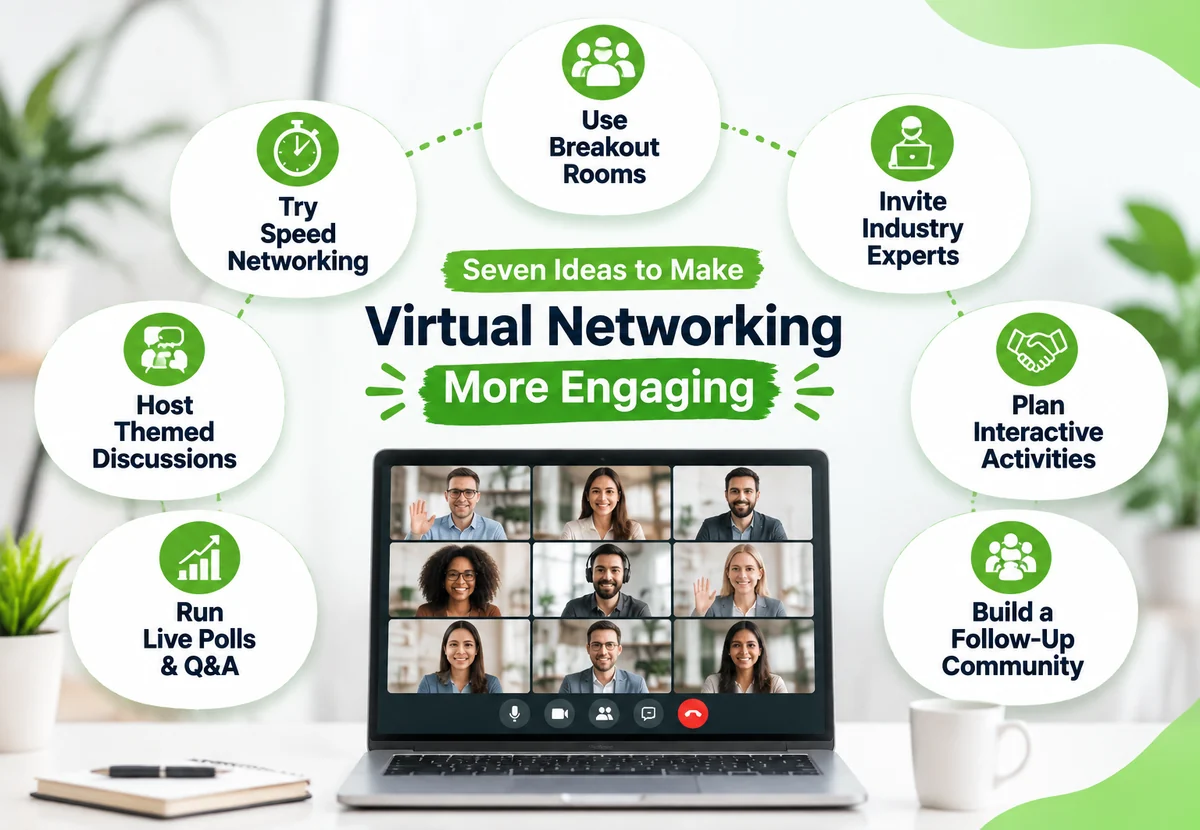
Organizers need to create opportunities for participants to interact rather than simply watch presentations.
Here are seven practical approaches:
Virtual speed networking: Arrange short one-to-one video meetings.
Industry roundtables: Create small groups around specific professional topics.
Interactive polls: Encourage attendees to share opinions during sessions.
Virtual breakout rooms: Divide large audiences into smaller discussion groups.
Expert Q&A sessions: Allow participants to interact directly with speakers.
Online introductions: Give attendees time to introduce their professional backgrounds.
Digital community spaces: Create dedicated groups for ongoing discussions.
These virtual networking ideas can make online events more interactive and encourage participants to develop meaningful connections.
Choosing the Right Virtual Networking Platform
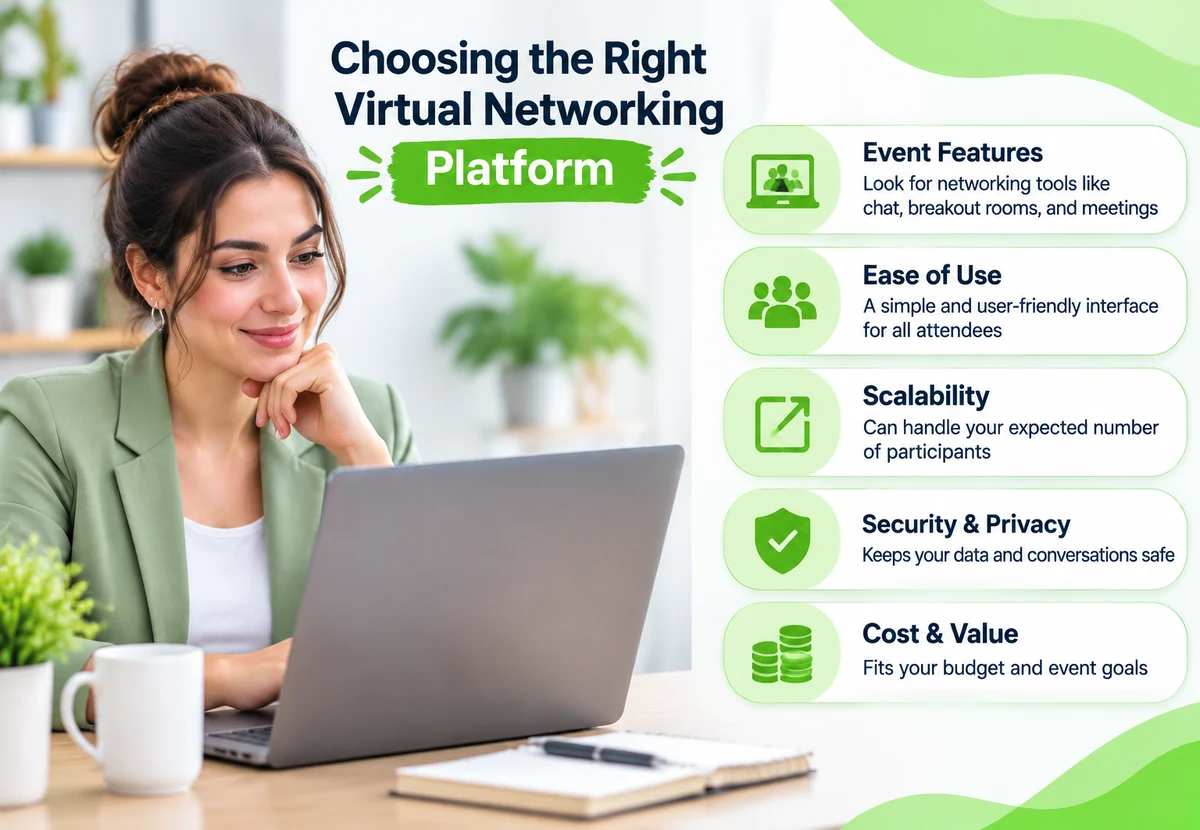
The platform plays an important role in the overall experience. Organizers should consider both participant requirements and event management needs.
Important features include:
Simple registration and login.
Professional attendee profiles.
Video and messaging capabilities.
Meeting scheduling.
Breakout room support.
Networking recommendations.
Engagement analytics.
A reliable virtual networking platform should make it easy for attendees to participate without requiring complicated technical steps.
Netwoor supports intelligent connection discovery, helping professionals identify relevant people and make networking interactions more purposeful.
How to Measure Virtual Networking Success
Organizers should evaluate more than registrations and attendance. They should also understand whether participants actually interacted.
| Metric | What it indicates |
|---|---|
| Attendance rate | Participant participation |
| Meetings booked | Networking activity |
| Messages exchanged | Digital interaction |
| Session participation | Audience engagement |
| Follow-up connections | Continued relationships |
Tracking these metrics can help organizers identify which formats create the most value and where improvements are needed.
Challenges of Virtual Networking
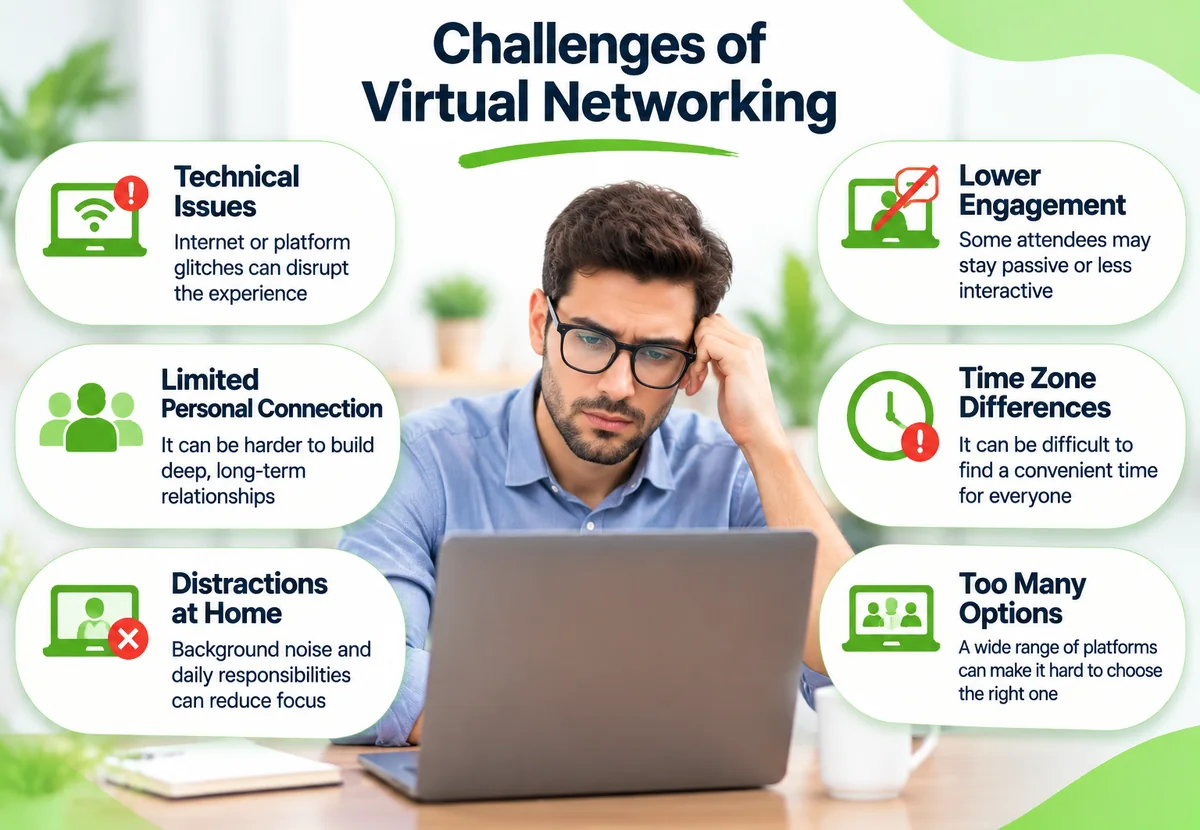
Although digital events offer flexibility, they also introduce certain challenges.
Technical problems, limited audience participation, time-zone differences, and screen fatigue can affect the attendee experience.
Organizers can address these issues by testing technology in advance, keeping sessions focused, providing clear instructions, and offering different opportunities for interaction.
Conclusion
Virtual networking has made professional relationship-building more accessible by removing many geographical and logistical barriers.
With the right platform, interactive activities, and well-planned sessions, organizers can create digital experiences that encourage meaningful professional connections.
The key is to prioritize participant interaction rather than treating virtual networking as another presentation-based event.
Frequently Asked Questions
1. Are virtual networking events effective?
Yes. They can help professionals discover contacts, exchange ideas, and build relationships remotely.
2. What equipment is needed?
A reliable internet connection, a computer or smartphone, and a microphone are usually sufficient.
3. How long should a virtual networking event last?
One to two hours is a practical starting point, depending on the format and audience.
4. Can virtual networking events include one-to-one meetings?
Yes. Many platforms support scheduled video meetings and individual networking sessions.
Get the next article in your inbox
Stay updated with practical insights, product updates, and networking tips — delivered straight to your inbox.