
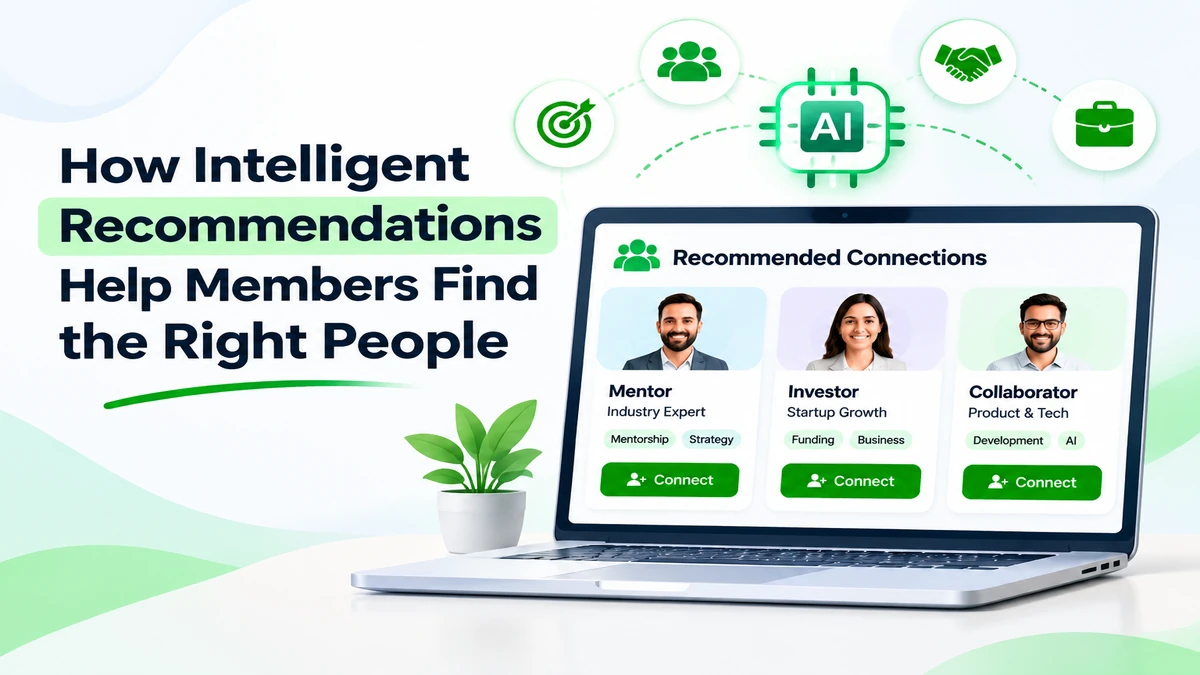
A professional may want to meet an experienced mentor, an entrepreneur may be searching for an investor, or a business owner may need a potential collaborator. Traditional directories and manual searches can help, but they often require considerable time and effort.
Intelligent recommendations offer a more focused way to solve this challenge. By analyzing member profiles, interests, expertise, and networking goals, modern platforms can suggest people who are more likely to share relevant interests or provide complementary value.
How Intelligent Recommendations Help Members Find the Right People?
This makes member discovery more convenient and helps communities create opportunities beyond ordinary messaging and discussion.
1. Understanding How Intelligent Recommendations Work
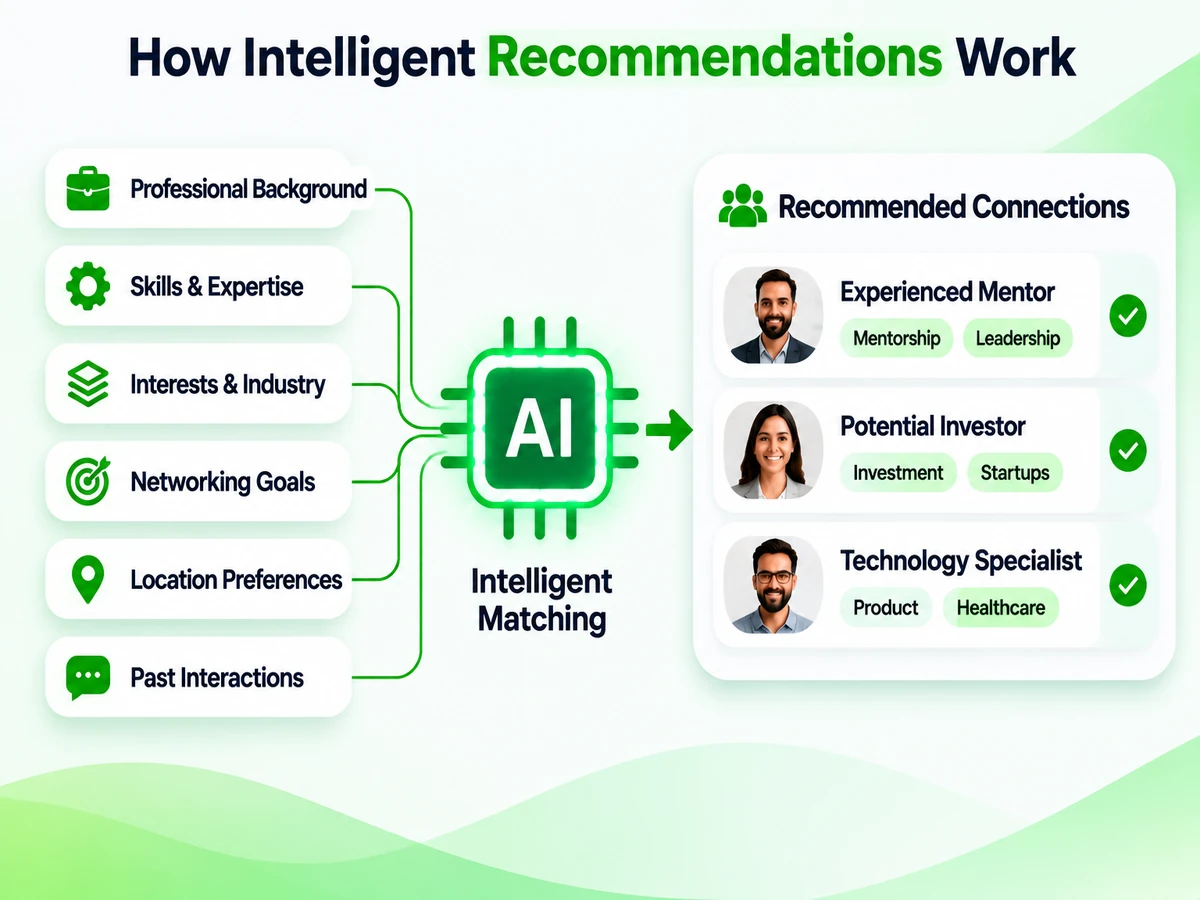
Intelligent recommendations use information about members to identify potentially relevant connections. Depending on the platform, recommendation systems may consider:
Professional background.
Skills and expertise.
Industry and business interests.
Location preferences.
Networking objectives.
Previous interactions.
Group memberships and participation.
For example, a startup founder developing a healthcare application may benefit from meeting healthcare investors, technology specialists, or experienced entrepreneurs.
Rather than displaying random profiles, the system attempts to identify people whose backgrounds or goals make an introduction potentially valuable.
2. Make Member Discovery More Efficient
Large communities can contain hundreds or thousands of profiles. Searching through each one manually is not always practical.
AI-powered recommendations help reduce this effort by highlighting potentially relevant people.
Members can spend less time browsing unrelated profiles and more time exploring useful connections.
For example, a marketing consultant looking for small business clients could receive suggestions based on professional interests, industry categories, and networking preferences.
This makes member discovery more focused and convenient.
3. Identify Shared Interests and Complementary Skills
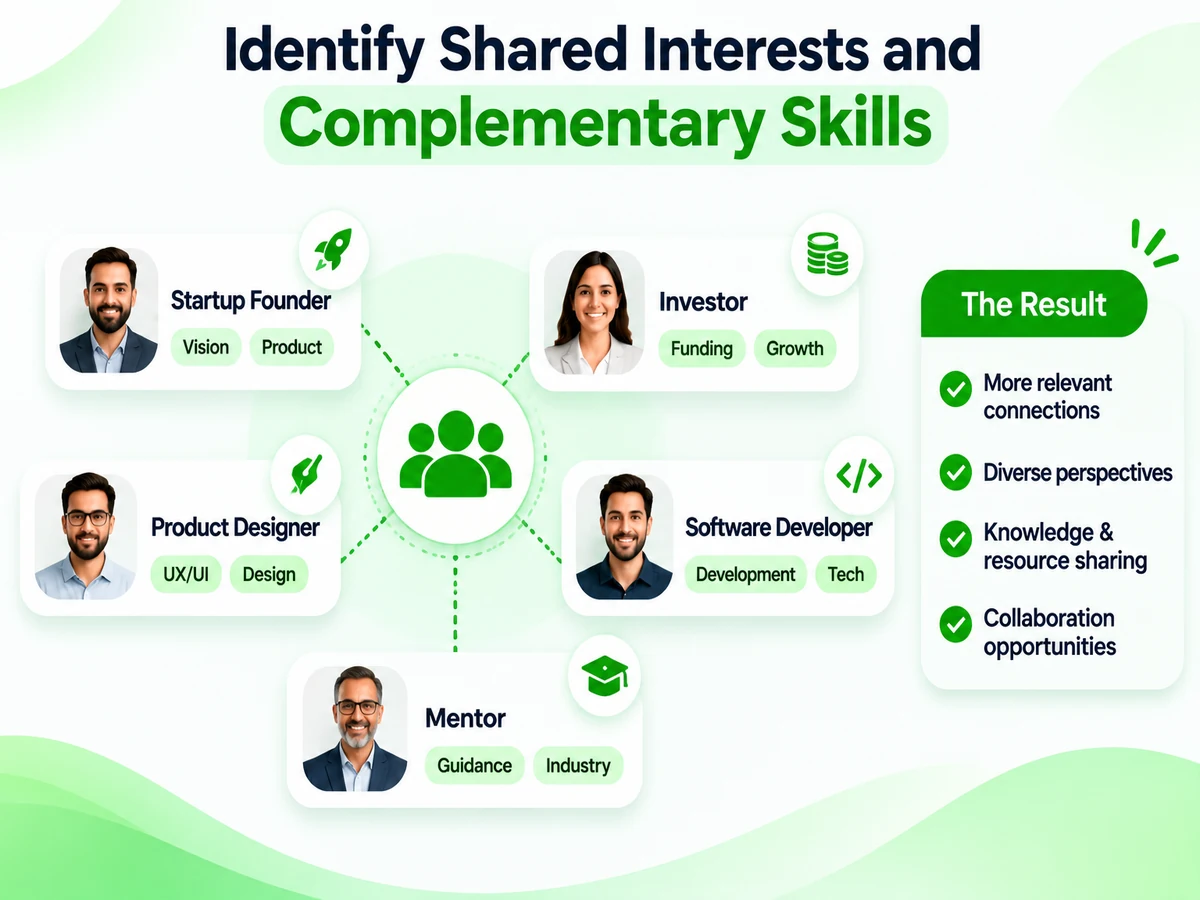
Good networking is not limited to finding people with identical backgrounds. Sometimes, the most valuable relationships develop between individuals with complementary expertise. Consider these examples:
A startup founder and an experienced investor.
A product designer and a software developer.
A business owner and a digital marketing consultant.
A junior professional and an experienced mentor.
A well-designed intelligent matching system can consider these different relationship types instead of relying only on profile similarities. This helps members discover people who may contribute different perspectives, knowledge, or resources.
4. Personalize Recommendations Around Member Goals
Different members join communities with different expectations. Some want professional mentorship, others are interested in collaboration, while some are looking for customers, investment, or industry knowledge.
Personalized suggestions can reflect these differences by considering individual networking preferences.
For example, a member who selects mentorship as a priority may receive recommendations for experienced professionals. Someone interested in business development may discover potential partners or industry contacts.
Allowing members to update their preferences also helps recommendations remain relevant as their goals change.
5. Create More Relevant Professional Networking Opportunities

A networking platform should help people move beyond collecting contacts.
Effective recommendations can support professional networking by identifying opportunities for introductions, meetings, discussions, and collaboration.
For instance, a conference attendee interested in fintech may receive suggestions for other participants working in financial technology.
This can make networking more purposeful because members have a starting point for conversations.
It can also help people who are new to a community become involved more quickly.
6. Support Better Community Matching Algorithms
The quality of recommendations depends on the information and logic used by the system. Effective community matching algorithms may combine several factors instead of relying on a single similarity score. These factors could include:
| Matching Factor | Potential Value |
|---|---|
| Shared interests | Common discussion topics |
| Professional experience | Relevant knowledge exchange |
| Complementary skills | Collaboration opportunities |
| Industry | Relevant professional context |
| Networking goals | More purposeful introductions |
| Previous interactions | Better understanding of preferences |
The system should also avoid repeatedly recommending the same profiles. Regular evaluation helps identify whether suggestions are genuinely useful or simply based on limited profile similarities.
7. Build Trust Through Transparent Recommendations
Members should understand why someone has been recommended to them.
For example, a platform might explain that two members share an industry interest or have complementary professional expertise.
Transparency makes recommendations easier to understand and evaluate.
Privacy is equally important. Platforms should collect only necessary information, provide appropriate profile visibility controls, and allow members to manage their preferences.
Members should also be able to dismiss irrelevant suggestions and update their information.
8. Measure Whether Recommendations Deliver Value
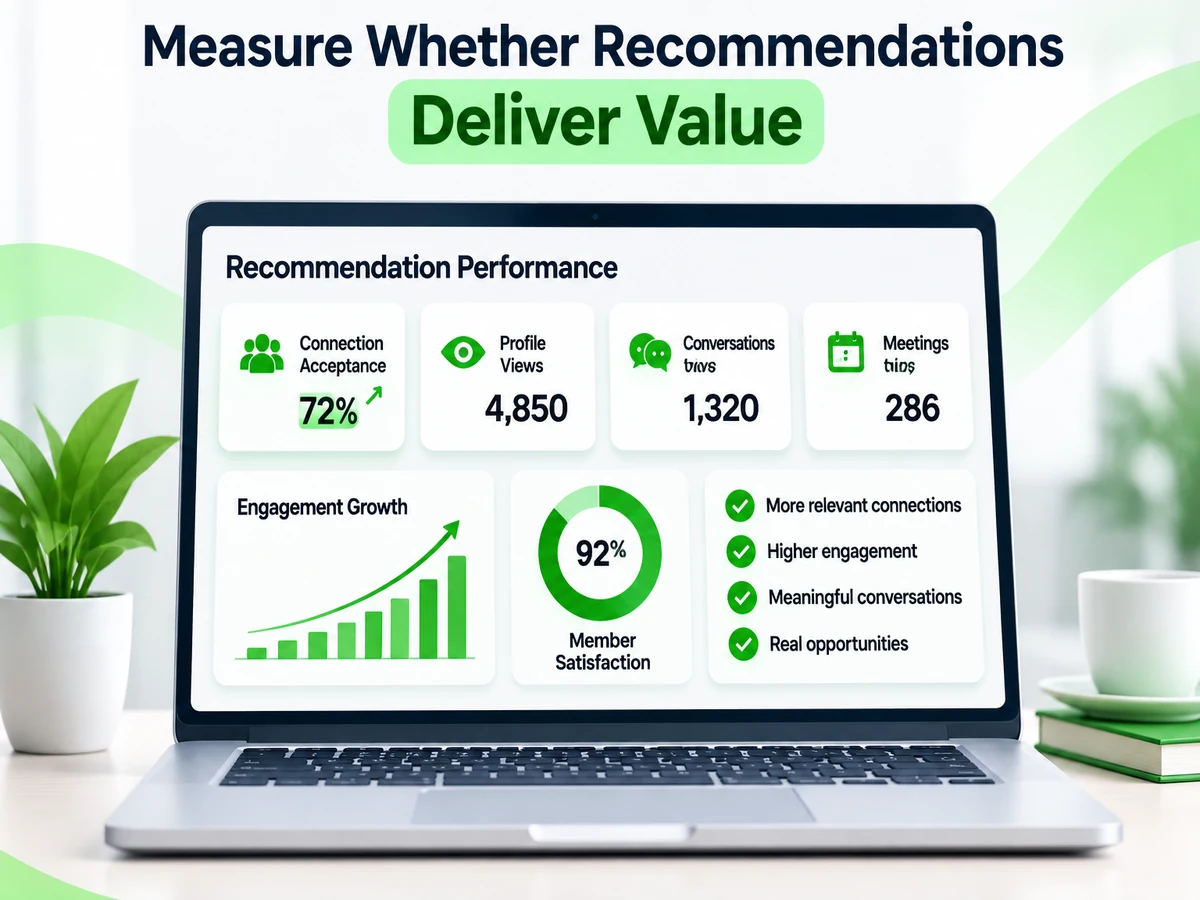
Recommendation systems should be evaluated according to their actual impact on member interactions. Useful indicators include:
Recommendation profile views.
Connection acceptance rates.
Conversations started.
Meetings arranged.
Repeat interactions.
Member satisfaction scores.
These indicators help administrators understand whether suggestions are creating meaningful relevant connections. A high number of recommendations does not automatically mean a better experience. Quality and usefulness should remain the priority.
How Intelligent Recommendations Improve Community Experiences?
Modern networking platforms are increasingly combining member profiles, communication tools, and recommendation systems to improve discovery.
For example, Netwoor AI positions its intelligent matching capabilities around helping members discover relevant professional connections.
When recommendation tools are integrated with directories, discussion groups, and events, members can explore opportunities through multiple channels rather than relying on manual searches alone.
This can create a more connected community where introductions lead to conversations and conversations can develop into professional relationships.
Conclusion
Intelligent recommendations can make online communities more useful by helping members discover people who align with their interests, expertise, and goals. Through personalized suggestions, complementary skill discovery, and improved matching systems, platforms can reduce the effort involved in finding relevant connections.
However, effective recommendations require accurate member information, transparent processes, privacy controls, and regular performance evaluation. The goal should always be to create meaningful networking opportunities rather than simply increase the number of suggested profiles.
Frequently Asked Questions
1. What are intelligent recommendations in a community platform?
They are automated suggestions that help members discover potentially relevant people based on profile information and interests.
2. Can recommendations connect people with different expertise?
Yes. Matching systems can identify complementary skills and professional goals, not just shared interests.
3. Do members control their recommendations?
Well-designed platforms allow members to update preferences and manage profile visibility.
4. How can recommendation quality be measured?
Track relevant profile views, accepted connections, conversations, meetings, and member feedback.
Get the next article in your inbox
Stay updated with practical insights, product updates, and networking tips — delivered straight to your inbox.