
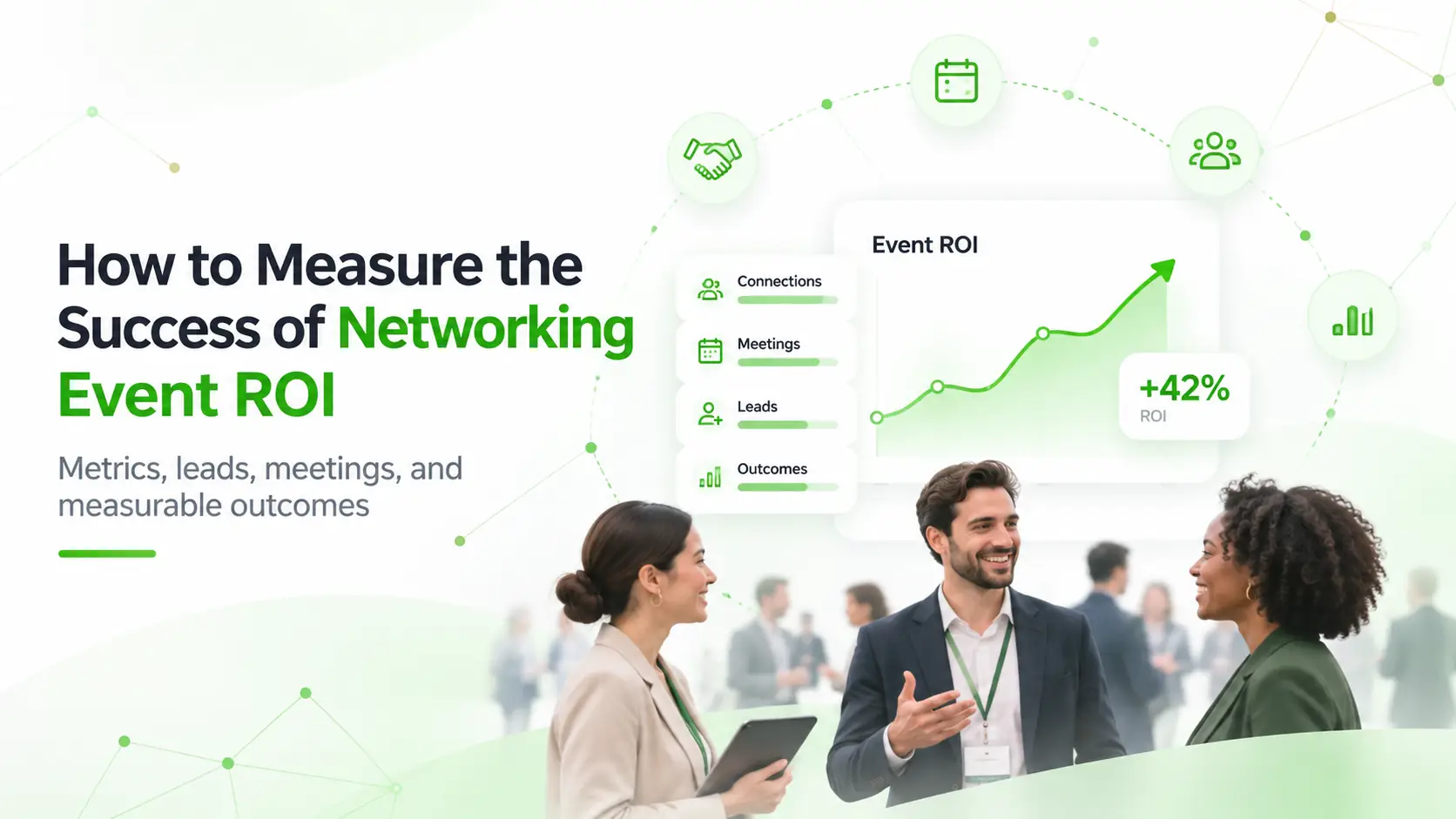
Organizing an event requires investment in planning, marketing, technology, speakers, venues, and attendee experiences. However, a successful event should deliver more than registrations and attendance numbers. It should create measurable value for organizers, sponsors, exhibitors, and participants. This is where event ROI becomes important.
Return on investment helps event teams understand whether the resources spent on an event generated meaningful business outcomes. For networking-focused events, this may include qualified connections, meetings, partnerships, leads, and future revenue.
What Is Event ROI?
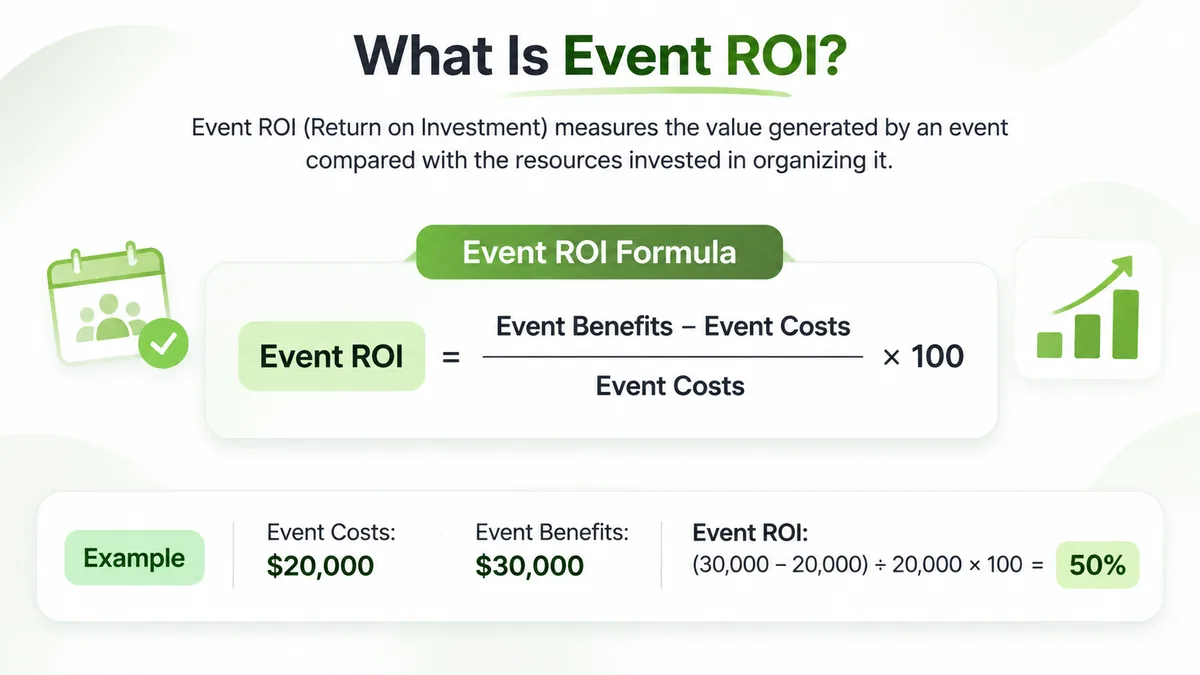
Event ROI measures the value generated by an event compared with the resources invested in organizing it.
It can include financial returns, business opportunities, audience engagement, and other measurable outcomes.
The basic formula is:
Event ROI = (Event Benefits − Event Costs) ÷ Event Costs × 100
For example, if an organization spends $20,000 on an event and generates $30,000 in measurable financial benefits:
ROI = ($30,000 − $20,000) ÷ $20,000 × 100
The resulting ROI is 50%.
However, not every event produces immediate revenue. Some networking events focus on brand awareness, relationship development, or long-term partnerships.
Why Measuring Event ROI Matters
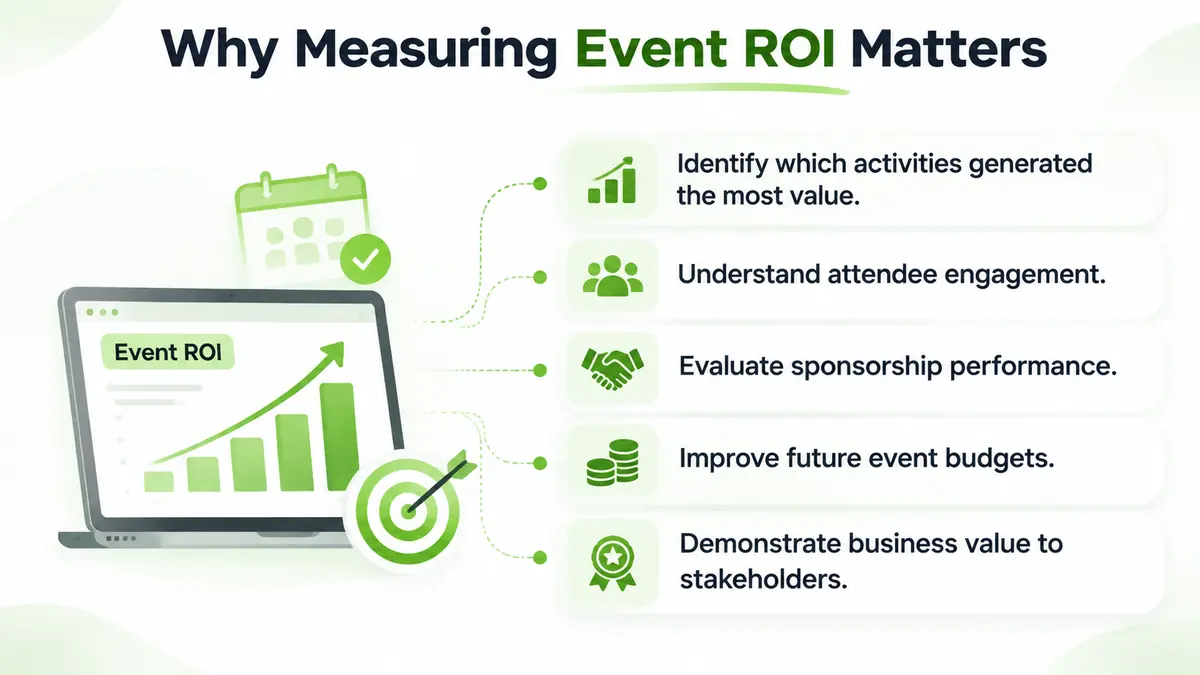
Measuring performance helps organizers understand whether an event achieved its objectives.
Some important benefits include:
Identifying which activities generated the most value.
Understanding attendee engagement.
Evaluating sponsorship performance.
Improving future event budgets.
Demonstrating business value to stakeholders.
For organizations hosting recurring networking events, these insights can support better planning and resource allocation.
Important Metrics to Measure Event Performance
The right metrics depend on the event's objectives. Organizers should select indicators before the event begins.
| Metric | What it measures | Why it matters |
|---|---|---|
| Registration rate | Interest in the event | Measures marketing effectiveness |
| Attendance rate | Actual participation | Shows audience commitment |
| Qualified leads | Potential business opportunities | Supports sales objectives |
| Meetings booked | Professional interactions | Measures networking activity |
| Conversion rate | Leads becoming customers | Shows business impact |
| Attendee satisfaction | Participant experience | Supports future improvements |
These event ROI metrics provide a more complete picture of event performance than attendance numbers alone.
How to Calculate Event ROI Step by Step
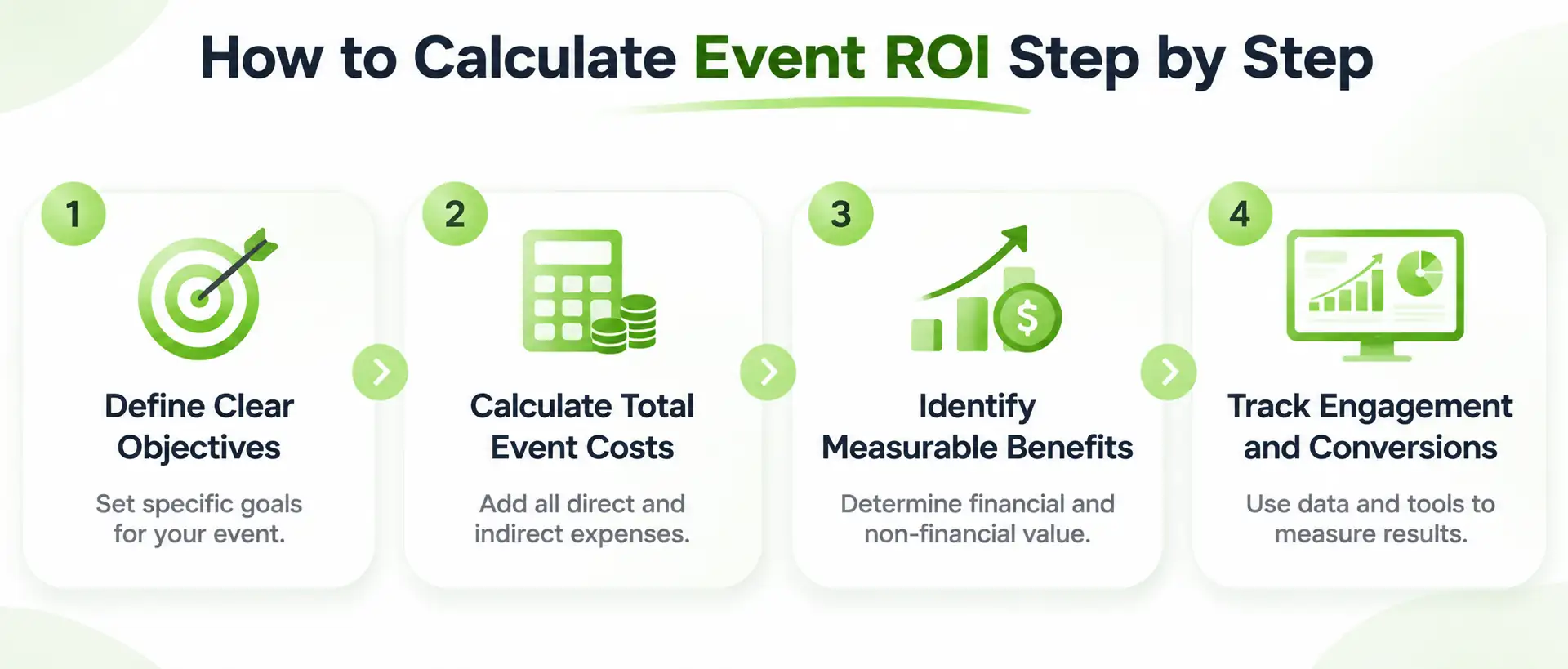
1. Define Clear Objectives
Start by identifying what the event should achieve. Objectives might include generating leads, building brand awareness, creating partnerships, or increasing customer engagement.
Without clear goals, it becomes difficult to determine whether an event was successful.
2. Calculate Total Event Costs
Include direct and indirect expenses.
Typical costs include:
Venue rental and equipment.
Speaker and entertainment fees.
Marketing and advertising.
Registration and event technology.
Catering and hospitality.
Staffing and operational expenses.
3. Identify Measurable Benefits
Next, calculate the financial and non-financial value generated by the event.
Financial benefits may include ticket sales, sponsorship revenue, new customers, and sales opportunities.
Non-financial benefits can include new professional relationships, brand exposure, attendee satisfaction, and industry recognition.
4. Track Engagement and Conversions
Use registration systems, event applications, surveys, and CRM tools to collect relevant information.
For example, tracking meeting requests and follow-up activity can help organizers understand whether networking sessions generated meaningful opportunities.
The Role of Technology in Event ROI Measurement
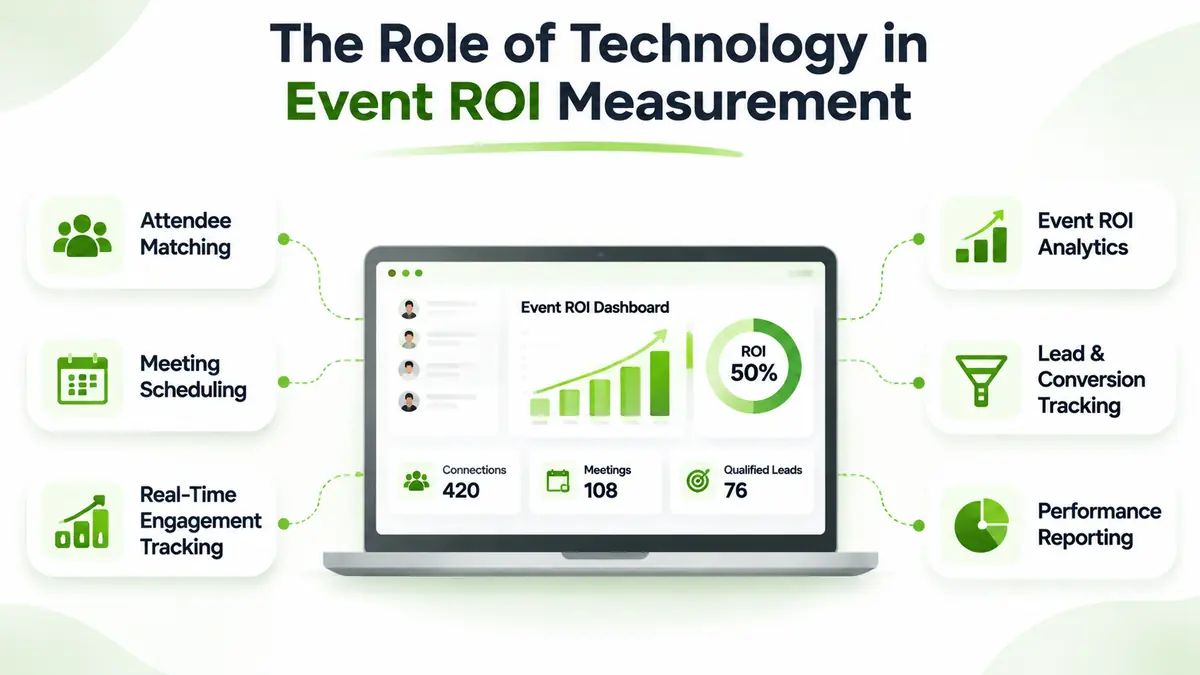
Digital tools make it easier to collect and analyze event data.
A modern event management platform can help organizers manage registrations, monitor attendance, track engagement, and coordinate communication.
Networking technology adds another layer by helping organizers understand how attendees interact.
Netwoor supports intelligent professional connection discovery, which can help make networking more purposeful and provide useful context for evaluating connection activity.
For organizers, these capabilities can complement traditional event analytics.
Strategies to Improve Event ROI
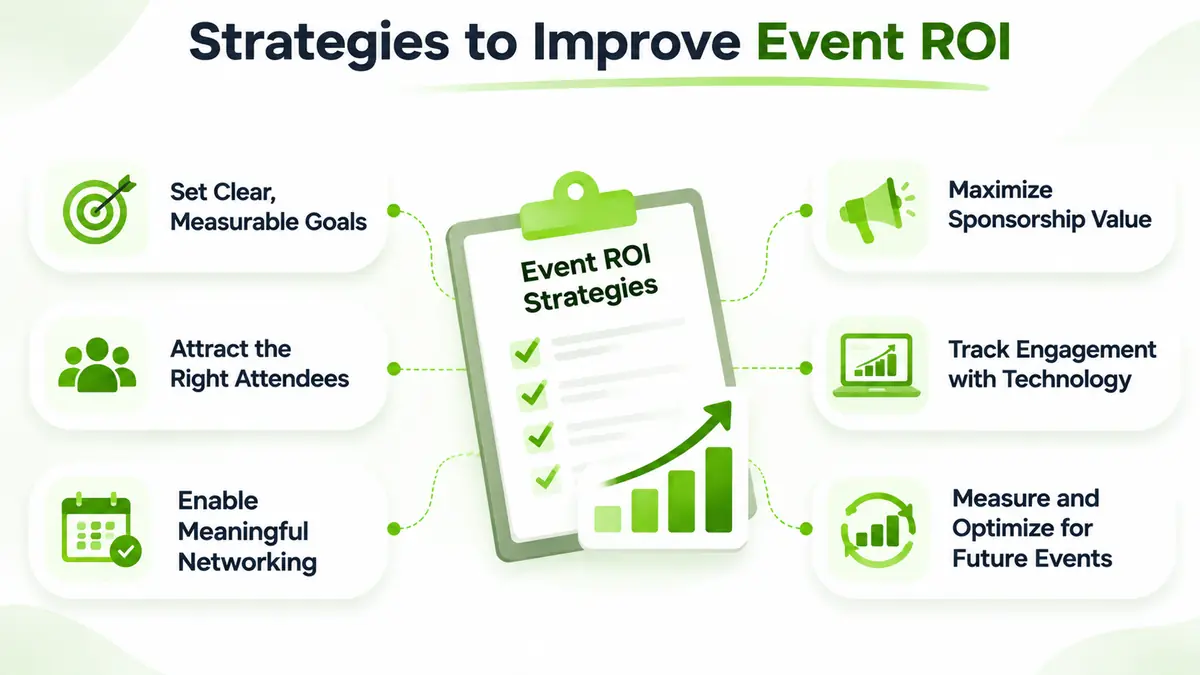
Improving returns does not always require increasing the event budget. Often, better planning and more relevant attendee experiences can make a significant difference.
Consider these approaches:
Target audiences according to clear event objectives.
Choose speakers and activities relevant to attendees.
Make registration simple and accessible.
Encourage meaningful attendee interactions.
Use digital tools to organize meetings.
Collect feedback after the event.
Follow up with qualified leads promptly.
These event optimization strategies help organizations use their resources more effectively.
Measuring Long-Term Event Value
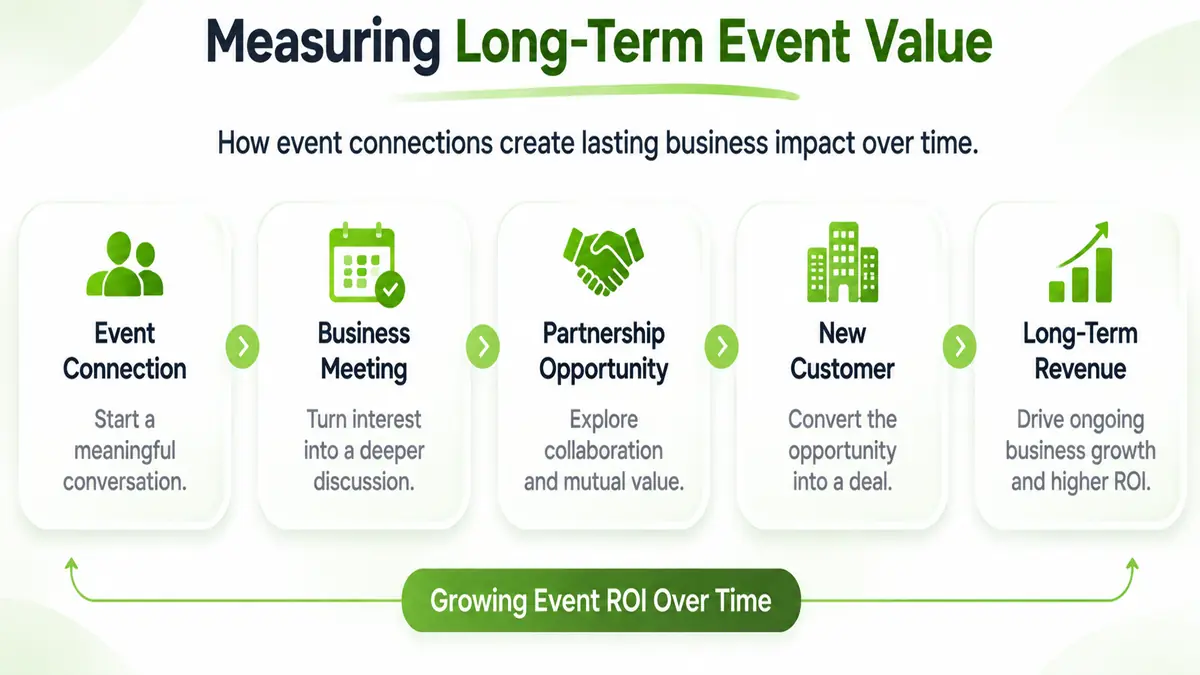
Some benefits appear weeks or months after an event. A professional introduction may eventually lead to a business partnership, while a conversation with a potential customer may turn into a sale later.
Therefore, organizers should not evaluate every event using immediate revenue alone.
A structured follow-up process can help track:
New business relationships.
Partnership discussions.
Sales opportunities.
Repeat event participation.
Customer retention.
This broader approach provides a more realistic understanding of event return on investment.
Conclusion
Measuring event performance helps organizers understand whether their investments are delivering meaningful outcomes. By defining objectives, tracking costs, monitoring engagement, and evaluating long-term benefits, businesses can make better decisions about future events.
A successful event is not simply one that attracts a large audience. It is one that creates measurable value for the people and organizations involved.
Frequently Asked Questions
1. What is a good event ROI?
There is no universal benchmark. A good ROI depends on the event's objectives, costs, and expected returns.
2. Should networking events measure financial ROI?
Yes, but organizers should also track connections, partnerships, engagement, and long-term opportunities.
3. When should event ROI be calculated?
Initial results can be calculated after the event, with longer-term outcomes reviewed over subsequent months.
4. What tools help measure event ROI?
Registration systems, analytics tools, CRM software, and event management platforms can support measurement.
Get the next article in your inbox
Stay updated with practical insights, product updates, and networking tips — delivered straight to your inbox.