Healthcare conferences bring together medical professionals, healthcare administrators, researchers, pharmaceutical companies, technology providers, and industry leaders. These events create valuable opportunities to exchange knowledge, explore collaborations, discuss emerging healthcare challenges, and build professional relationships.
However, attending a conference does not automatically lead to meaningful connections. Participants need a clear networking approach to identify relevant professionals, initiate conversations, and maintain relationships after the event. Effective healthcare conference networking helps attendees move beyond casual introductions and develop connections that can support professional development, research, and business growth.
How to Build Connections at Healthcare Conferences?
Here are seven practical ways to build stronger connections at healthcare conferences.
1. Research Attendees and Speakers Before the Event
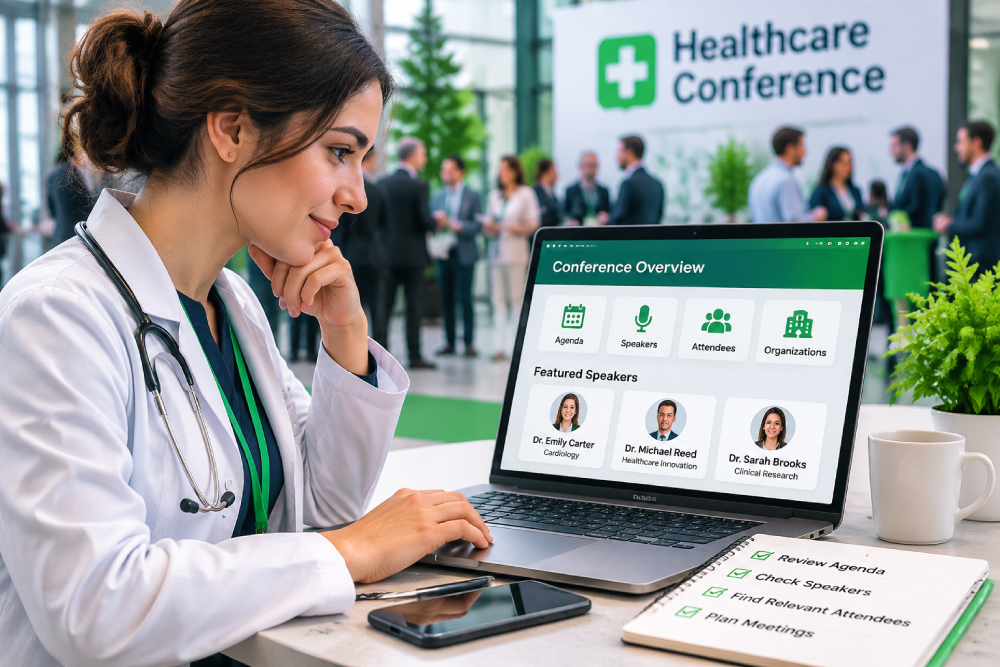
Preparation is an important part of successful networking. Before attending, review the conference agenda, speaker profiles, participating organizations, and discussion topics.
Identify healthcare professionals, researchers, hospital representatives, and industry experts whose work aligns with your interests. This helps you prioritize conversations instead of approaching people without a clear purpose.
For example, healthcare startups looking for clinical partnerships may benefit from connecting with hospital administrators, while researchers may want to meet specialists working in similar fields.
These conference networking strategies help attendees make better use of their time and identify relevant professional opportunities.
2. Participate in Workshops and Discussion Sessions

Presentations are useful for learning, but interactive sessions often create better opportunities for professional conversations. Workshops, panel discussions, roundtables, and group activities allow participants to exchange perspectives and discuss shared challenges.
During these sessions, ask relevant questions and contribute meaningful insights. If someone shares an interesting perspective, approach them afterward to continue the discussion.
Participating actively in networking activities for conferences also makes it easier to connect with professionals who share similar interests.
3. Prepare a Short and Professional Introduction

Healthcare professionals often have limited time between sessions, so introductions should be clear and relevant.
Prepare a short introduction that explains your professional background, current role, and reason for attending the event.
For example:
"Hello, I'm Alex. I work in healthcare administration, focusing on improving patient experiences and operational efficiency. I'm interested in learning how other healthcare organizations are addressing similar challenges."
Avoid turning introductions into lengthy professional presentations. Instead, give the other person an opportunity to share their experience.
A natural introduction creates a comfortable starting point for professional conference networking and encourages meaningful conversations.
4. Use Digital Networking Platforms
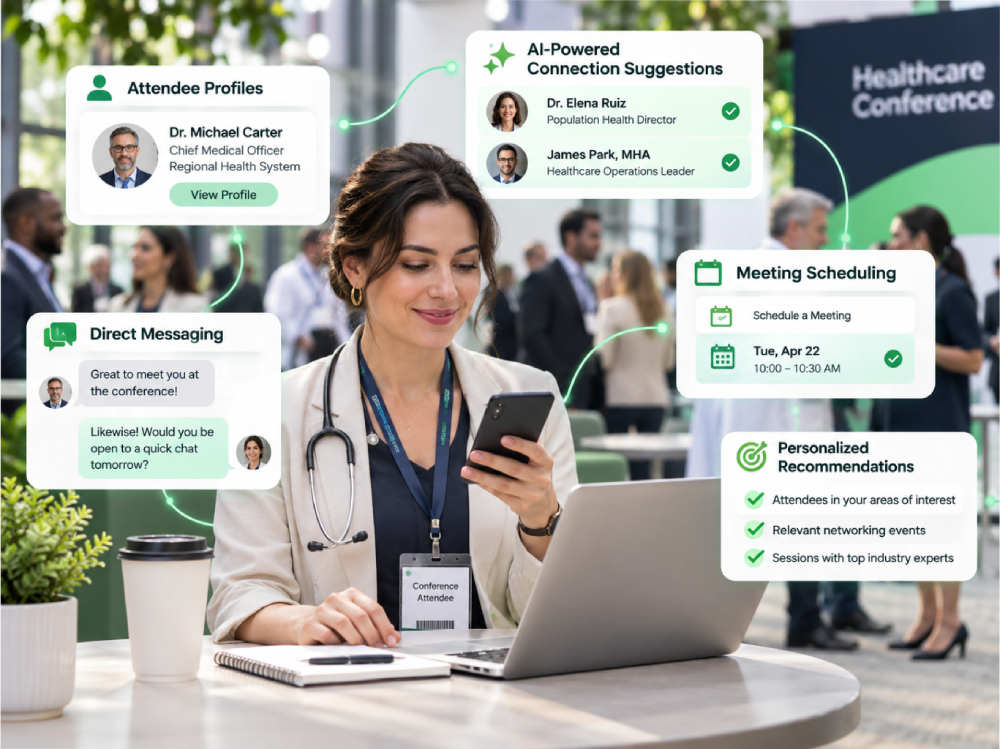
Managing connections at large healthcare events can be difficult, particularly when hundreds of professionals are attending multiple sessions simultaneously.
Digital solutions make it easier to discover relevant participants, exchange professional information, and arrange meetings. A dedicated conference networking app can help attendees explore profiles, identify shared interests, and communicate before or during the event.
AI-powered networking solutions can make this experience more effective by recommending relevant connections based on professional backgrounds and interests.
For example, Netwoor AI helps facilitate smarter professional connections through AI-powered matchmaking and networking capabilities.
These platforms reduce the effort required to find relevant people and help organizers create more connected event experiences.
5. Focus on Knowledge Exchange Instead of Immediate Business Opportunities

Healthcare networking should be built around shared knowledge, professional interests, and mutual value.
Rather than immediately promoting services or asking for business opportunities, start conversations about industry developments, clinical challenges, patient care improvements, and healthcare innovation.
For example, you could ask a hospital administrator about their approach to improving patient engagement or discuss emerging medical technologies with healthcare researchers.
These conversations create opportunities to exchange ideas and establish professional credibility. Successful conference networking tips often emphasize listening, asking relevant questions, and showing genuine interest in other professionals' experiences.
6. Attend Informal Networking Sessions

Some of the most valuable connections happen outside formal presentations. Coffee breaks, networking dinners, exhibition areas, and social gatherings provide relaxed environments where attendees can interact naturally.
Make an effort to join small-group discussions rather than remaining with colleagues you already know.
You can also participate in healthcare-focused meetups and specialized networking sessions to connect with professionals working in specific medical or business sectors.
These informal interactions strengthen healthcare conference networking by creating opportunities for conversations that may not happen during scheduled sessions.
7. Follow Up After the Conference
Building a professional relationship requires consistent communication beyond the event.
After meeting someone, send a personalized message within 24–48 hours. Mention the session you attended together, a topic you discussed, or an idea you found interesting.
You can connect through LinkedIn, share relevant research, exchange industry resources, or arrange a follow-up meeting.
Avoid sending identical messages to every contact. Personalized communication demonstrates genuine interest and makes it easier to continue the relationship.
A consistent follow-up approach turns initial introductions into valuable professional connections and strengthens long-term healthcare conference networking.
Conclusion
Building connections at healthcare conferences requires preparation, active participation, meaningful conversations, and consistent follow-up. Whether you are a medical professional, researcher, healthcare entrepreneur, or industry representative, approaching networking with clear objectives can help you discover valuable opportunities.
By combining face-to-face interactions with digital networking solutions, attendees can develop stronger professional relationships and make healthcare events more productive.
Frequently Asked Questions
1. Who should attend healthcare networking events?
Doctors, nurses, researchers, healthcare administrators, entrepreneurs, and medical technology professionals.
2. What should you bring to a healthcare conference?
Bring business cards, professional identification, a digital profile, and prepared questions.
3. How can students benefit from healthcare conferences?
Students can meet experienced professionals, explore career paths, and discover research opportunities.
4. Are virtual healthcare conferences useful for networking?
Yes. They allow participants to connect with healthcare professionals across different locations without travelling.
Get the next article in your inbox
Stay updated with practical insights, product updates, and networking tips — delivered straight to your inbox.