
Choosing the right networking technology can significantly influence the success of a conference. As events grow in size and complexity, organizers need reliable solutions to connect attendees, facilitate meetings, manage professional interactions, and improve engagement. However, with numerous platforms offering different features, selecting the right solution can be challenging.
A proper conference networking software comparison helps organizers understand which platform best supports their event objectives, audience requirements, and operational needs. Rather than choosing software based on popularity or pricing alone, it is important to evaluate its features, usability, integration capabilities, and overall value.
Understand Your Conference Networking Requirements
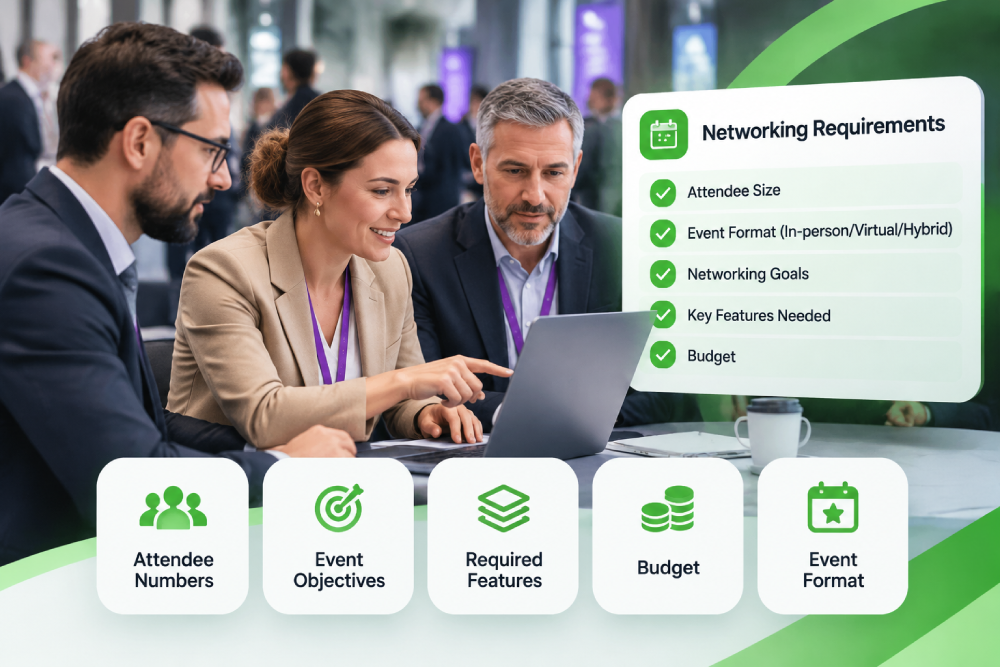
Before comparing different platforms, identify what your event actually needs. A small professional gathering may require basic attendee profiles and messaging, while a large international conference may need AI matchmaking, meeting scheduling, analytics, and hybrid event capabilities.
Consider your expected attendee numbers, event format, industry, networking objectives, and available budget. These factors will help you narrow down suitable solutions and avoid paying for features your event does not require.
Compare Essential Features and Capabilities
Not every networking platform offers the same functionality. Some focus on attendee discovery, while others provide comprehensive event management and communication capabilities.
The following table highlights the features worth comparing before making a decision.
| Feature | What to evaluate |
|---|---|
| AI matchmaking | Relevant recommendations based on interests and professional profiles |
| Meeting scheduling | Booking, availability, and calendar integration |
| Attendee profiles | Professional backgrounds, company details, and interests |
| Messaging | Direct communication and connection requests |
| Analytics | Meetings, connections, and engagement reports |
| Integrations | CRM, registration, and event management compatibility |
| Security | Data protection, privacy, and access controls |
| Scalability | Ability to support different event sizes |
An effective conference networking software comparison should focus on how well these features work together rather than simply counting how many options a platform advertises.
Evaluate Matchmaking and Meeting Management

One of the most valuable capabilities of networking software is helping attendees discover relevant professionals. Basic solutions allow participants to browse directories, while advanced platforms recommend connections based on professional interests, industries, roles, and objectives.
Look for intelligent recommendations, personalized profiles, and interest-based discovery.
Meeting management is equally important. Attendees should be able to request meetings, check availability, schedule conversations, and receive reminders without complicated processes.
A dedicated conference networking app should make these interactions simple and accessible across mobile devices and desktops.
Examine User Experience and Customization
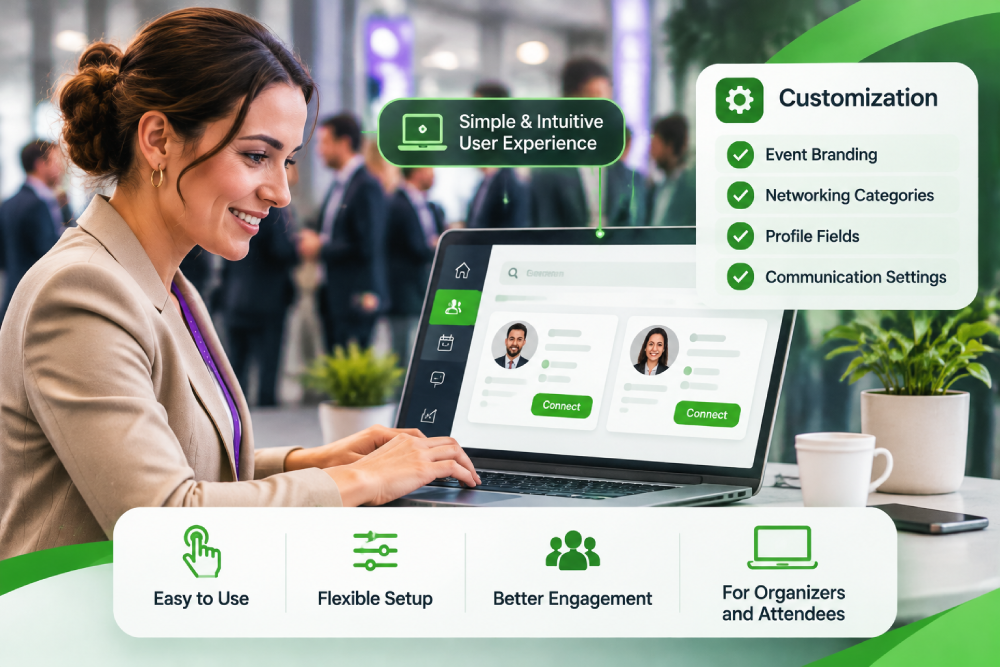
Even feature-rich software can fail if attendees find it difficult to use. A complicated registration process, confusing interface, or slow navigation can discourage participation.
Evaluate whether users can easily create profiles, explore recommendations, send messages, and arrange meetings.
Customization also matters. Organizers should be able to adjust branding, networking categories, profile fields, and communication settings according to their event requirements.
When assessing conference networking tools, prioritize platforms that offer a consistent and intuitive experience for both organizers and participants.
Check Integration, Analytics, and Technical Support
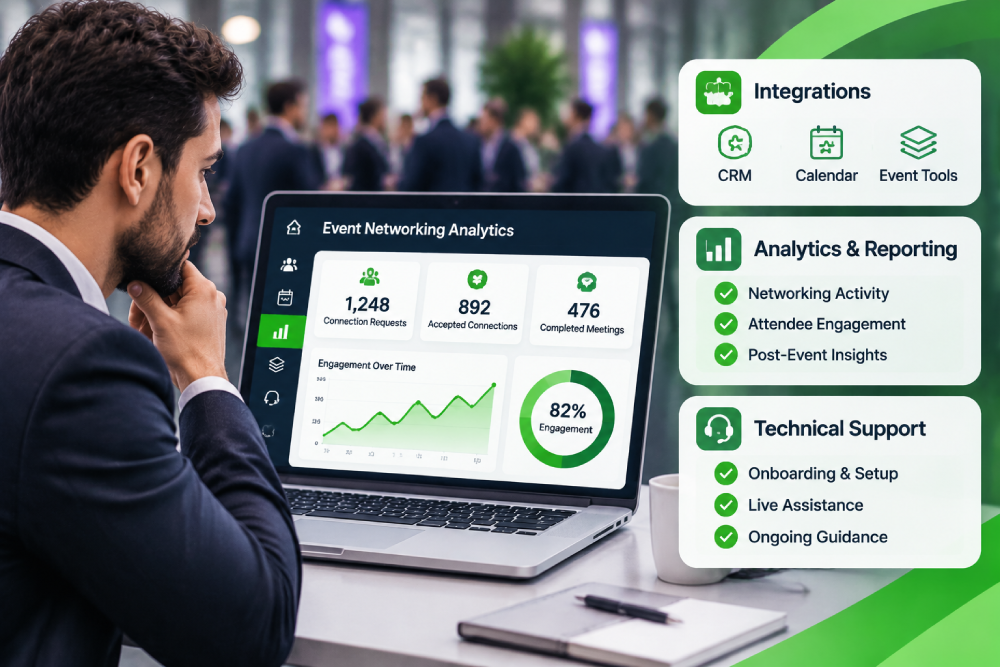
Conference organizers often use separate systems for registrations, ticketing, marketing, attendee communication, and event scheduling. Networking software should integrate smoothly with these existing workflows.
Check whether the provider offers APIs, CRM integrations, calendar synchronization, and compatibility with popular event management systems.
Analytics are another important consideration. Organizers should be able to understand how participants interact and which networking activities generate engagement.
Useful reporting capabilities include:
Connection requests, accepted connections, and completed meetings.
Attendee engagement, popular sessions, and networking activity.
Participant feedback and post-event interaction trends.
Compare Pricing and Scalability
Pricing structures differ across networking platforms. Some charge according to attendee numbers, while others offer monthly subscriptions, event-based packages, or custom enterprise pricing. Look beyond the advertised subscription cost and evaluate the total investment.
| Cost consideration | Questions to ask |
|---|---|
| Subscription | Is pricing monthly, annual, or event-based? |
| Attendee limits | Are additional participants charged separately? |
| Setup | Are implementation and onboarding included? |
| Integrations | Do third-party connections require extra fees? |
| Premium features | Are AI matchmaking and analytics included? |
| Support | Is live technical assistance included? |
Consider AI Capabilities and Future Readiness

AI is transforming how professionals discover and establish business connections. Modern networking solutions can use intelligent recommendations to identify relevant participants and personalize networking experiences.
For example, Netwoor AI focuses on AI-powered matchmaking and smarter professional connections, helping event participants discover people aligned with their interests and objectives.
When evaluating AI capabilities, examine how recommendations are generated, whether attendees can manage their preferences, and how personal information is protected.
The right event networking platform should combine useful automation, reliable performance, and appropriate privacy safeguards.
Conclusion
Selecting the right networking software requires more than comparing feature lists and subscription prices. Organizers should evaluate matchmaking quality, meeting management, usability, integrations, analytics, scalability, and security.
A thorough conference networking software comparison helps identify a platform that aligns with event objectives while improving attendee engagement and professional interactions.
Frequently Asked Questions
What is conference networking software?
It is a digital platform that helps event attendees discover, communicate with, and connect with relevant professionals.
Is free conference networking software worth using?
Yes. It can work well for smaller events with basic requirements and sufficient security features.
Can networking software support hybrid conferences?
Yes. Many platforms support in-person and virtual interactions through messaging, video meetings, and digital profiles.
What is the most important feature to compare?
Matchmaking quality is essential because it determines how effectively attendees discover relevant connections.
Get the next article in your inbox
Stay updated with practical insights, product updates, and networking tips — delivered straight to your inbox.