

Building an online community takes time, planning, and consistent effort. As membership grows, community owners may consider turning their platform into a sustainable business. However, monetization should not come at the expense of member trust or the quality of the experience.
Understanding online community monetization means finding ways to generate revenue while continuing to provide value. A successful approach balances business goals with members' expectations, privacy, and participation.
What Does Community Monetization Mean?

Community monetization involves generating income from the value, services, and experiences offered through a digital community. Revenue may come from memberships, educational resources, events, sponsorships, or additional services.
A community does not need millions of members to generate revenue. A smaller group with shared interests and a clear purpose may be more valuable than a large audience with little interaction.
Before choosing a revenue model, consider:
What problem does the community solve?
What value do members receive regularly?
Are members willing to pay for additional benefits?
Which services can be offered without weakening the free experience?
How will revenue support community operations?
These questions help create a practical community monetization strategy instead of introducing paid features without understanding member needs.
6 Ways to Monetize an Online Community
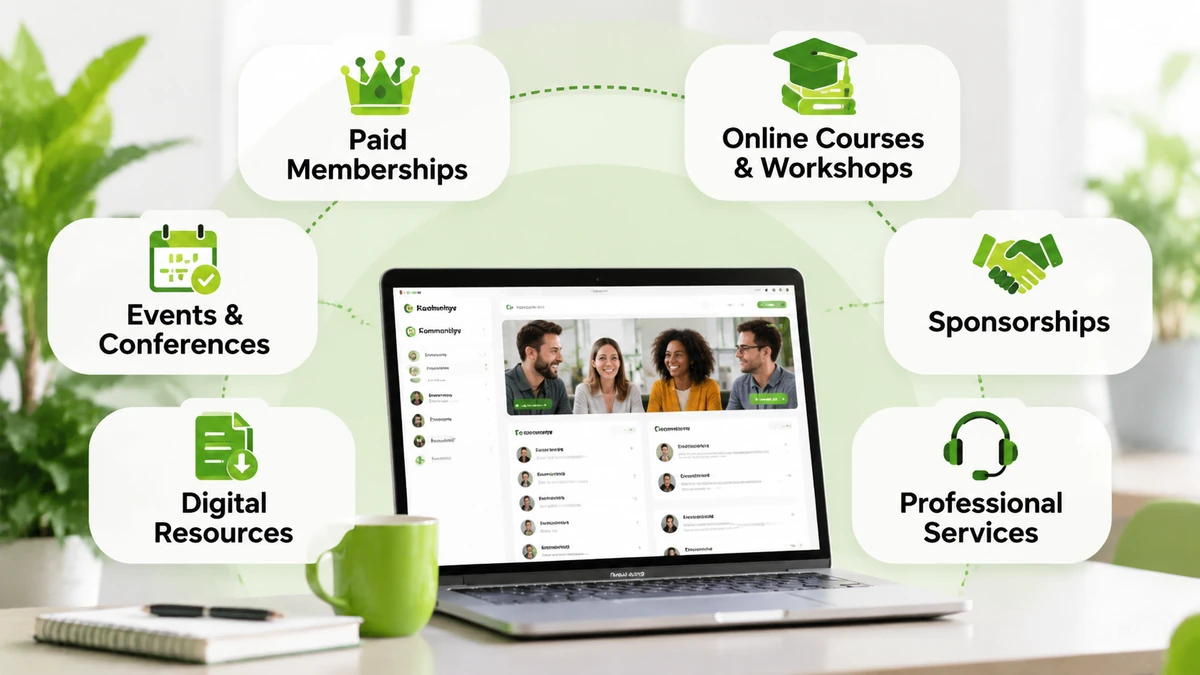
Different communities require different business models. Consider these options:
1. Paid Memberships
Offer premium access to exclusive discussions, specialist resources, member-only groups, or additional networking opportunities. Clearly explain what paid members receive.
2. Online Courses and Workshops
Use community expertise to develop educational content. Courses, live training, and practical workshops can provide value to members who want to develop specific skills.
3. Events and Conferences
Charge for selected webinars, virtual conferences, networking sessions, or specialist events. Keep the pricing appropriate to the experience being offered.
4. Sponsorships
Partner with relevant companies that want to reach your audience. Sponsored content should be clearly identified and aligned with community interests.
5. Digital Resources
Sell templates, reports, guides, research materials, or downloadable tools that solve specific member problems.
6. Professional Services
Some communities can offer consulting, mentoring, recruitment support, or expert services. These should be delivered transparently and with clear expectations.
Comparing Community Revenue Models
The right online community business model depends on audience needs, operating costs, and the type of value you can consistently deliver.
| Revenue model | How it works | Main consideration |
|---|---|---|
| Paid membership | Members pay recurring fees | Ongoing value is essential |
| Courses and workshops | Sell learning experiences | Content quality matters |
| Events | Charge for attendance | Events need clear value |
| Sponsorships | Brands pay for relevant exposure | Maintain member trust |
| Digital products | Sell useful resources | Products must solve real problems |
| Professional services | Charge for specialist support | Requires relevant expertise |
You can combine multiple models, but introducing too many at once may make the community experience confusing.
How to Monetize Without Losing Member Trust

A community is built on relationships. Members may stop participating if they feel every discussion is designed to sell something.
Follow these practices:
Keep useful free resources available.
Explain the benefits of paid membership clearly.
Avoid excessive promotional messages.
Disclose sponsorships and commercial partnerships.
Collect only the information necessary to provide services.
Ask members for feedback before introducing major paid features.
A responsible paid online community should make the difference between free and premium access easy to understand. Members should never feel pressured to pay simply to remain part of ordinary conversations.
Choosing the Right Community Platform

Monetization also depends on the technology supporting your community. A suitable community management software solution can help organize members, manage access, communicate updates, and understand participation.
Look for features such as:
Membership levels and access controls.
Payment integration or support for paid services.
Member profiles and directories.
Event management.
Analytics and reporting.
Privacy and moderation controls.
A community platform pricing structure should also fit your budget. Compare subscription costs, transaction fees, user limits, and additional charges before committing.
Netwoor focuses on connected professional experiences, where member discovery and relevant networking can contribute to a more useful community environment.
Measuring Monetization Performance

Revenue alone does not show whether a community is healthy. Track financial performance alongside member satisfaction and participation.
Useful indicators include:
Monthly recurring revenue.
Paid membership growth.
Renewal and cancellation rates.
Event registrations and attendance.
Revenue per paying member.
Member engagement and feedback.
These online community KPIs help you understand whether the business model is sustainable and whether members continue receiving value.
Conclusion
Monetizing an online community requires a clear understanding of member needs and the value your platform provides. Paid memberships, courses, events, sponsorships, and professional services can all create revenue opportunities. The best approach is to start with one suitable model, communicate transparently, and improve your offerings based on member feedback.
FAQs
1. Can a small online community make money?
Yes. A focused community can generate revenue through memberships, workshops, resources, or specialist services.
2. What is the best way to monetize a community?
The best model depends on member needs, community purpose, and the value you can consistently provide.
3. Should all community content be paid?
Not necessarily. A mix of free participation and optional premium benefits can help maintain accessibility.
4. How can I monetize without losing members?
Be transparent about pricing, avoid excessive promotions, and ensure paid offerings provide genuine value.
Get the next article in your inbox
Stay updated with practical insights, product updates, and networking tips — delivered straight to your inbox.