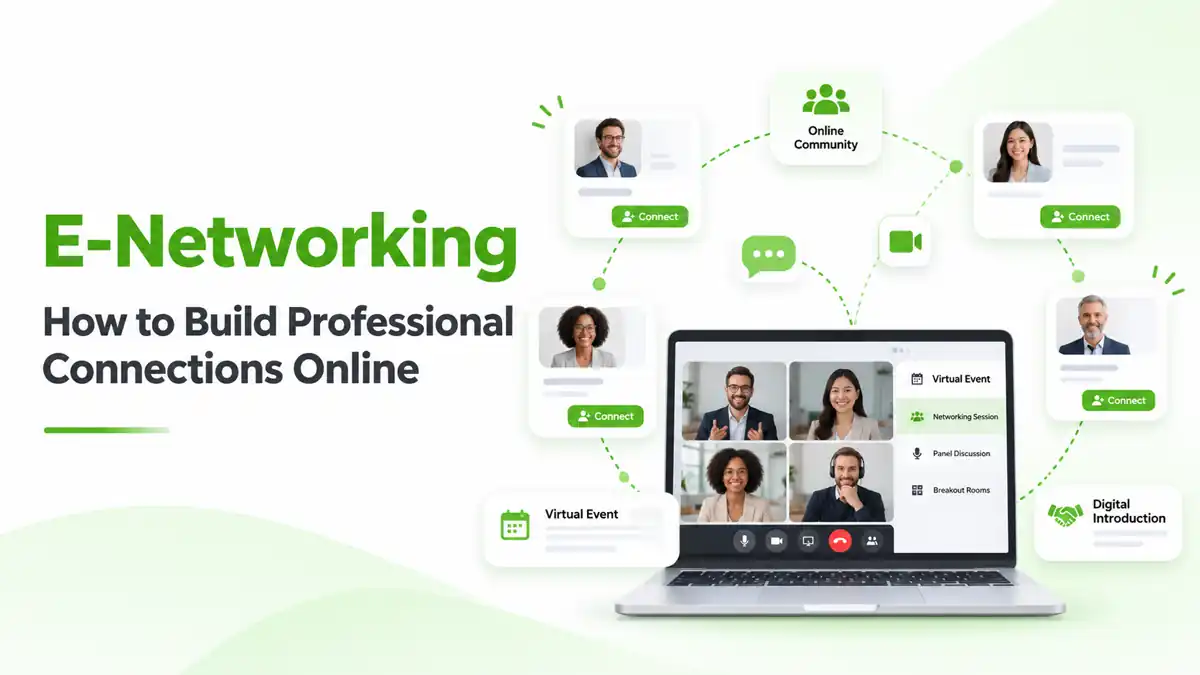


Professional networking has changed significantly with the growth of digital technology. People no longer need to attend physical conferences or business meetings to meet industry professionals, discover opportunities, and build valuable relationships. Today, networking applications make it possible to connect with people, exchange information, and maintain professional relationships from almost anywhere.
Application networking allows professionals to use digital applications to discover relevant contacts, communicate with industry peers, and expand their business networks. Whether you are an entrepreneur, job seeker, freelancer, or business owner, choosing the right networking application can make relationship-building more accessible and organised.
What Is Application Networking?
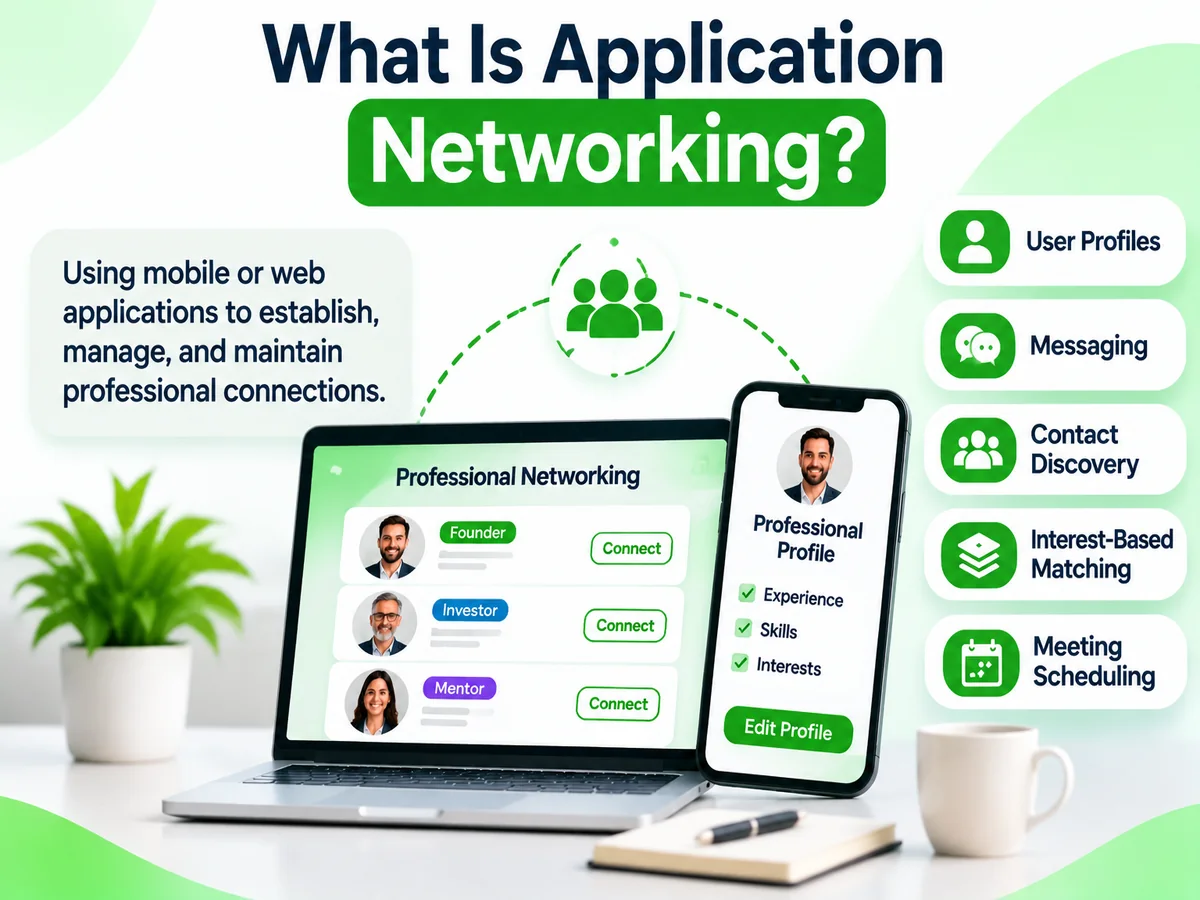
Application networking refers to using mobile or web-based applications to establish, manage, and maintain professional connections. These applications provide features such as user profiles, messaging, contact discovery, interest-based matching, and meeting scheduling.
Unlike traditional networking, which often depends on physical introductions, digital networking applications allow people to connect regardless of their geographical location.
For example, an entrepreneur attending a virtual business conference can use a networking application to discover potential investors, connect with other founders, and arrange follow-up meetings.
How Do Networking Applications Work?
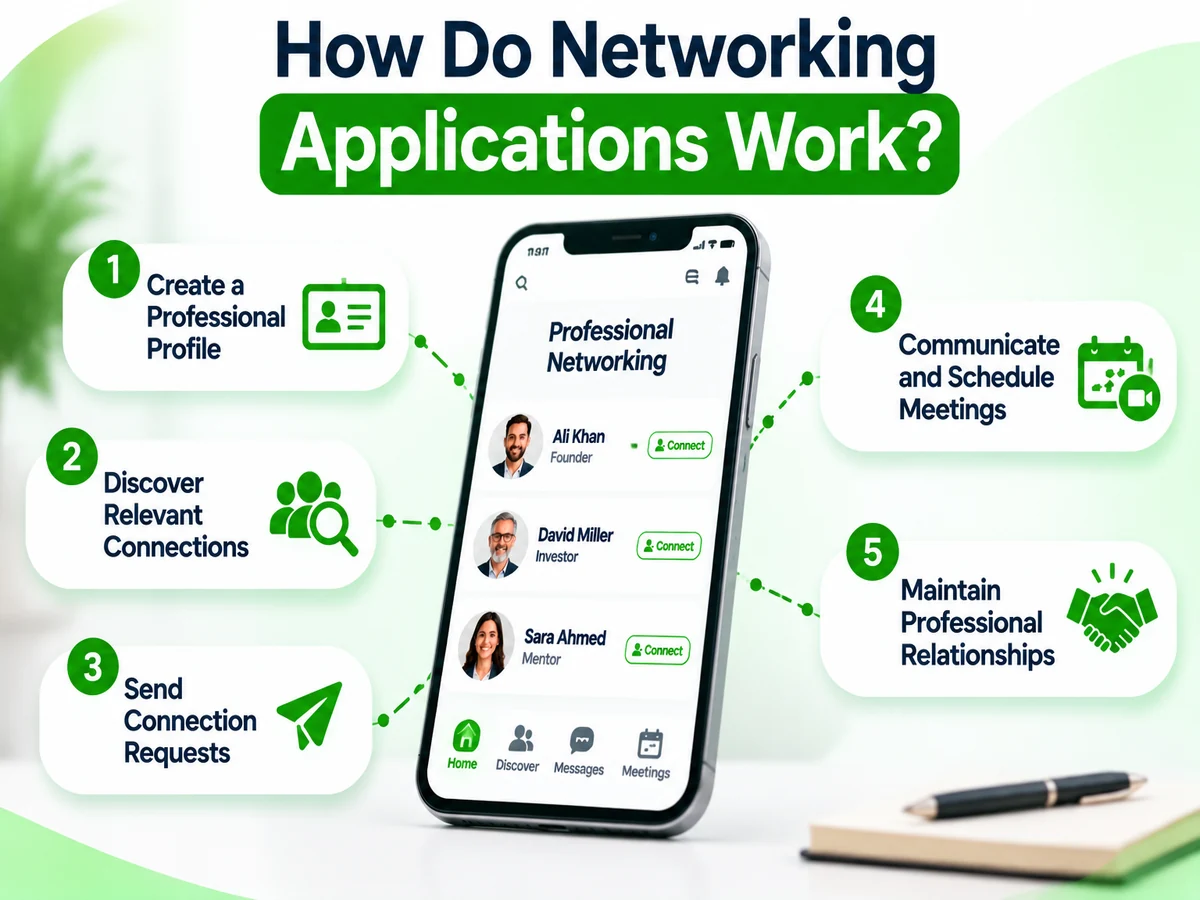
Most professional networking apps provide a combination of features designed to help users discover and communicate with relevant people.
1. Create a Professional Profile
Users begin by creating a profile that includes their name, professional background, job title, company, skills, and interests. A complete profile helps other professionals understand their experience and identify possible reasons to connect.
2. Discover Relevant Connections
Networking applications may allow users to search for people based on industry, location, professional interests, or job roles. Some platforms also offer recommendations or matching features.
3. Send Connection Requests
Once users discover someone relevant, they can send a connection request or introduction message. Personalised messages can make these interactions more meaningful.
4. Communicate and Schedule Meetings
Many applications offer messaging, video meetings, or calendar integrations. These features allow users to continue conversations and arrange professional discussions.
5. Maintain Professional Relationships
After connecting, users can exchange updates, share resources, and follow up on previous conversations. Consistent communication helps turn initial introductions into lasting relationships.
Benefits of Using Networking Applications

Expand Your Professional Network
Networking applications allow users to connect with professionals outside their existing workplace, industry, or geographical area. This can help individuals discover new perspectives and potential opportunities.
Save Time and Improve Accessibility
Instead of travelling to every networking event, users can discover and communicate with professionals online. This makes networking more convenient for people with busy schedules.
Discover Business Opportunities
Entrepreneurs and business owners can use business networking apps to identify potential clients, suppliers, investors, and collaborators.
Support Career Development
Job seekers and students can connect with experienced professionals, learn about different career paths, and discover opportunities within their preferred industries.
Organise Professional Contacts
Some applications help users maintain contact information, conversation histories, and meeting schedules. These features make it easier to manage relationships as their network grows.
What Features Should You Look for in a Networking Application?

Not every application offers the same experience. Before choosing one, consider the features that match your professional goals.
Professional profiles: Allow users to present their experience, skills, and interests.
Smart matching: Recommends connections based on relevant information and preferences.
In-app messaging: Makes it easier to communicate after an introduction.
Meeting scheduling: Helps users arrange conversations without unnecessary back-and-forth.
Event integration: Connects networking activities with conferences, exhibitions, and virtual events.
Privacy controls: Gives users control over their profile visibility and shared information.
Contact management: Helps users organise and maintain professional relationships.
It is also important to check an application's usability, pricing, security practices, and data privacy policies.
How to Use Networking Applications Effectively
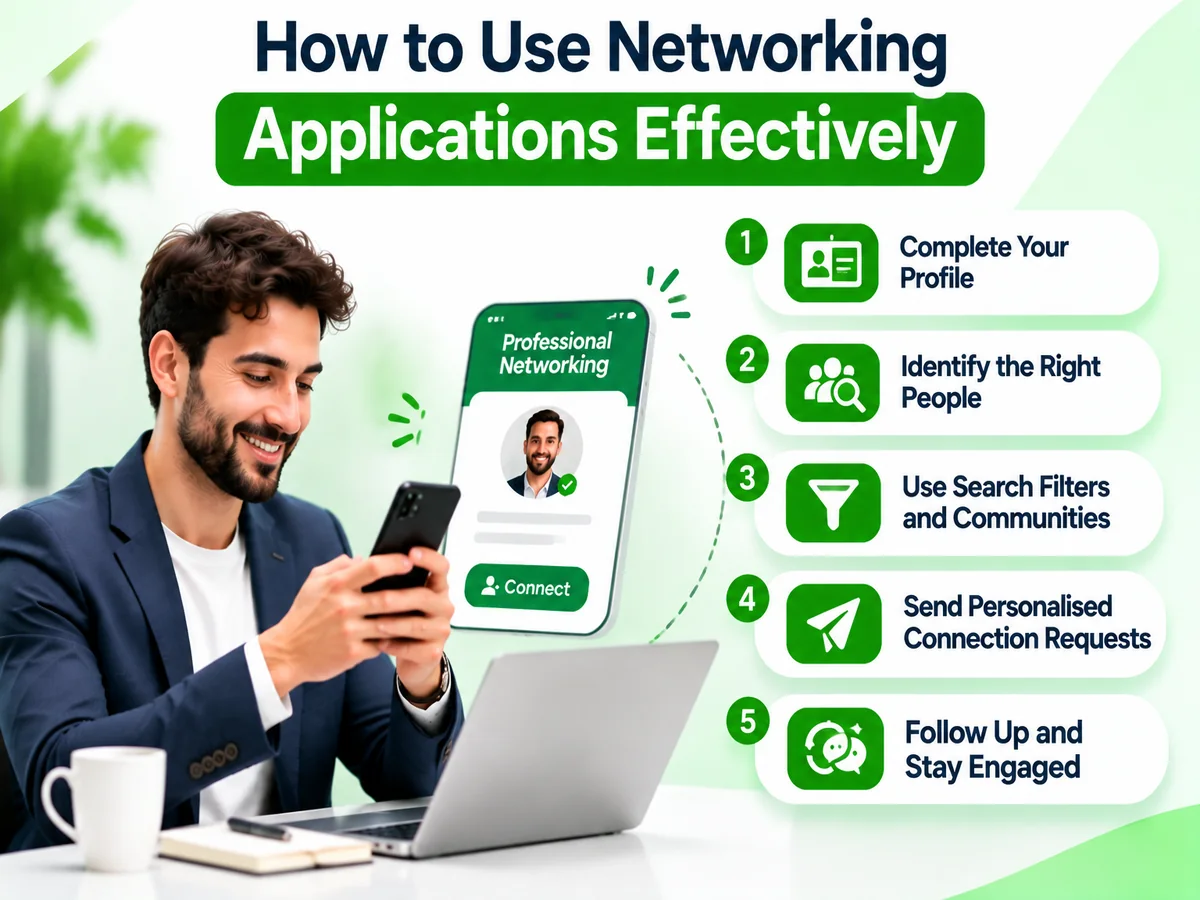
Simply downloading an application and sending connection requests is not enough to build a strong professional network.
Start by completing your profile and identifying the types of professionals you want to meet. Use relevant search filters, join industry communities, and participate in conversations that match your interests.
When sending connection requests, explain why you want to connect. Avoid sending generic promotional messages to every person you discover.
You should also follow up after meaningful conversations. A short message referring to a previous discussion can help establish continuity and create opportunities for future collaboration.
Platforms such as Netwoor AI focus on professional discovery and intelligent matching, helping people identify relevant connections in networking and event environments.
Conclusion
Application networking provides professionals with a convenient way to discover contacts, exchange knowledge, and build relationships beyond geographical boundaries. With features such as professional profiles, messaging, smart matching, and meeting scheduling, networking applications can make professional interactions more organised.
The best results come from using these tools to develop genuine relationships rather than simply collecting connections.
Frequently Asked Questions
1. What is the purpose of a networking application?
It helps users discover professionals, communicate, exchange information, and develop business relationships.
2. Are networking applications useful for small businesses?
Yes. They can help small businesses discover potential customers, partners, suppliers, and industry contacts.
3. Can networking applications help with job searches?
Yes. They can help job seekers connect with recruiters, employers, and professionals in their preferred industries.
4. Are networking applications free to use?
Some offer free features, while others charge for premium tools, advanced searches, or business services.
Get the next article in your inbox
Stay updated with practical insights, product updates, and networking tips — delivered straight to your inbox.