

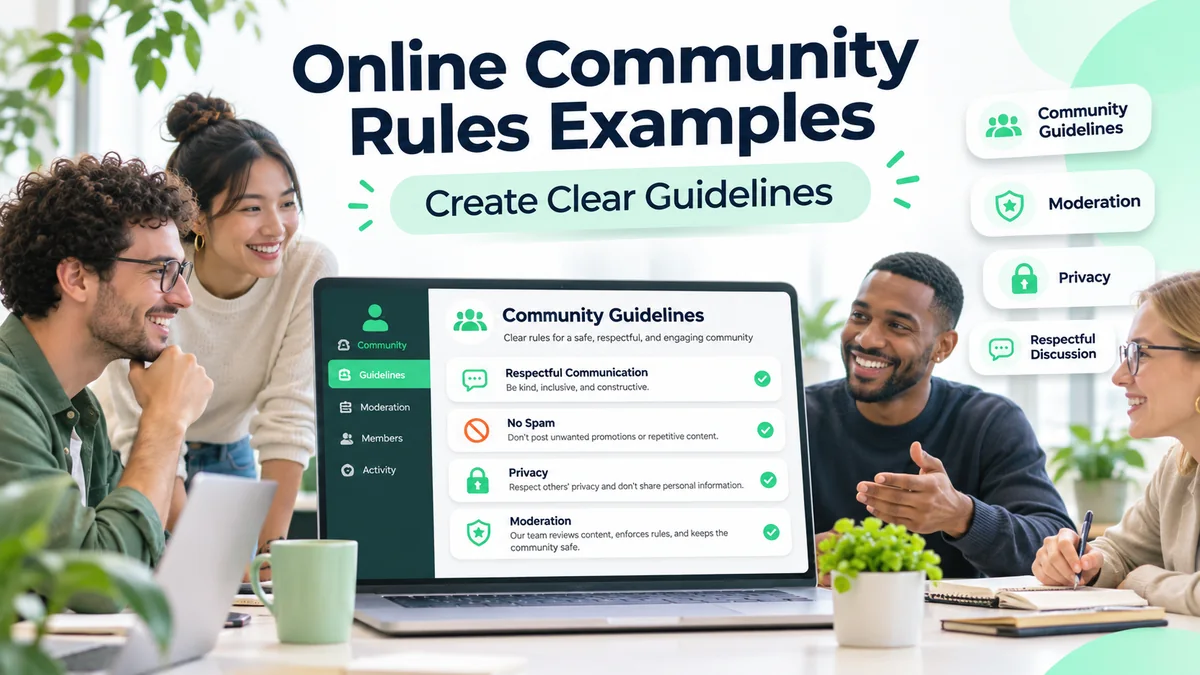
An online community brings people together to share ideas, ask questions, exchange resources, and build relationships. However, members may have different communication styles, expectations, and opinions. Without clear guidelines, conversations can become confusing, promotional content may overwhelm discussions, and disagreements may affect the overall experience.
Well-written online community rules examples can help administrators establish expectations and create a respectful environment. Rules do not need to be complicated. They should explain how members are expected to behave and what happens when guidelines are not followed.
Why Online Community Rules Are Important?

Community guidelines provide a shared understanding of acceptable behavior. They help members participate confidently and give moderators a consistent basis for handling problems.
Clear rules can help:
Prevent harassment and abusive communication.
Reduce spam and irrelevant promotions.
Protect members' privacy.
Keep discussions relevant to the community's purpose.
Explain how moderators handle violations.
Encourage respectful disagreement.
A clear set of online community guidelines also makes it easier for new members to understand the community before participating.
10 Online Community Rules Examples
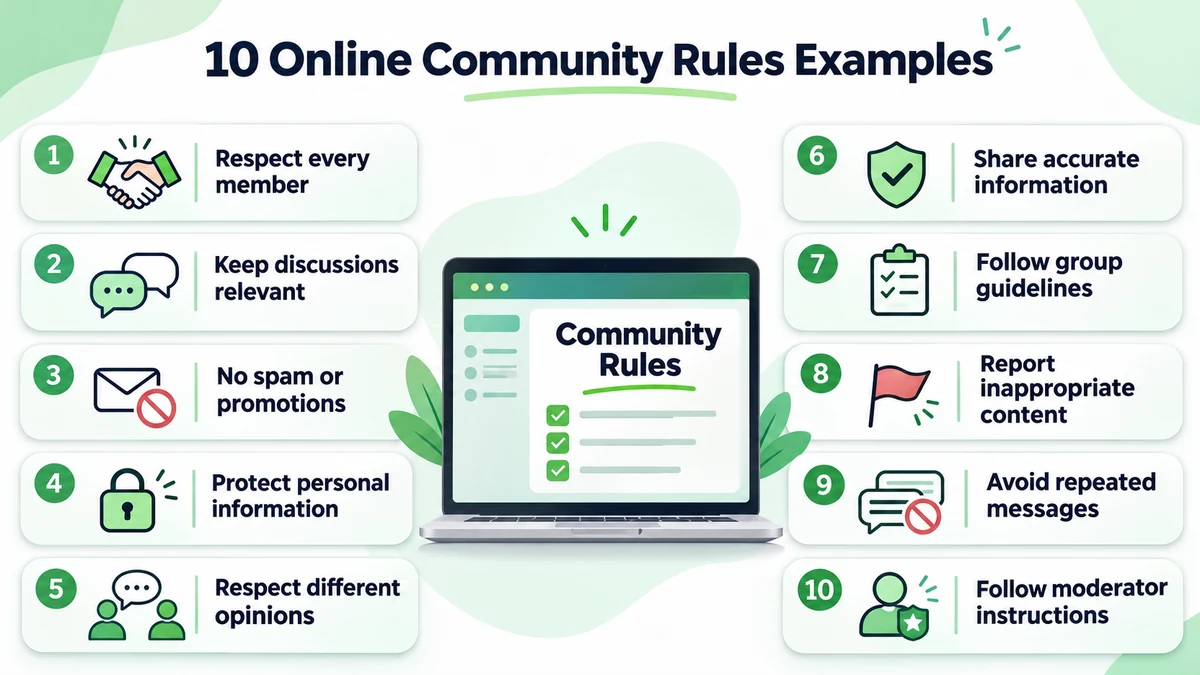
The rules should reflect the community's purpose, audience, and activities. The following examples can be adapted for professional groups, educational communities, and interest-based platforms.
1. Treat Every Member With Respect
Communicate politely, even when you disagree. Personal attacks, harassment, and discriminatory language should not be allowed.
2. Keep Discussions Relevant
Share content that relates to the community's purpose. Use the appropriate groups or discussion spaces for different subjects.
3. Avoid Spam and Unapproved Promotions
Do not repeatedly post advertisements, referral links, or unrelated promotional messages.
4. Protect Personal Information
Do not share another person's contact details, private messages, or personal information without permission.
5. Respect Different Opinions
Members should be able to express different perspectives without being insulted or threatened.
6. Share Accurate Information
Avoid presenting unverified claims as facts. Provide reliable sources when discussing important information.
7. Follow Group-Specific Guidelines
Some groups may have additional rules related to professional discussions, academic work, or private information.
8. Report Inappropriate Content
Use the reporting process when you encounter harassment, spam, or other violations instead of escalating the situation.
9. Avoid Repeated Messages
Do not flood discussions with duplicate posts or unnecessary replies.
10. Follow Moderator Instructions
Moderators help maintain community standards. Members should cooperate with reasonable moderation decisions and use the appropriate process to raise concerns.
What Should a Community Rules Document Include?
A community rules template should be easy to read and organized into clear sections.
| Section | What to include |
|---|---|
| Purpose | Explain why the community exists |
| Member behavior | Set expectations for respectful communication |
| Content guidelines | Explain what members can share |
| Privacy | Protect personal and confidential information |
| Promotions | Define acceptable promotional activity |
| Moderation | Explain how reports and violations are handled |
| Consequences | Describe possible actions for rule violations |
A community moderation policy should explain how administrators review reported content and respond to repeated or serious violations.
How to Introduce Rules to New Members
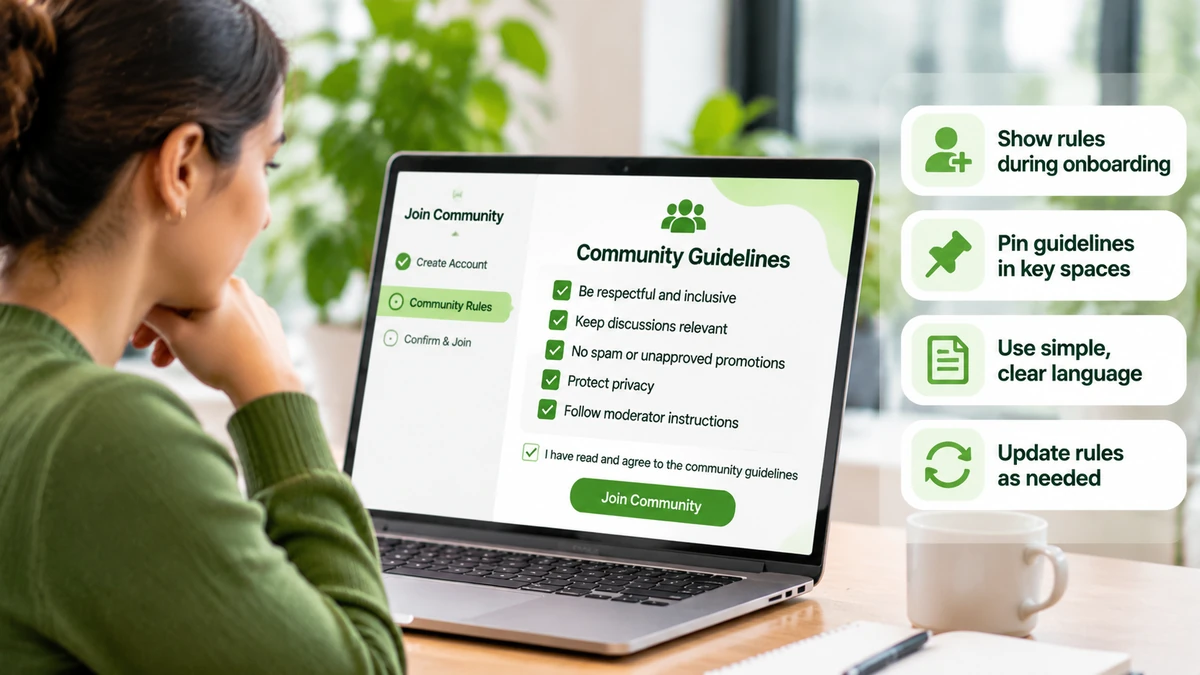
Rules are most effective when members see them before problems occur. Do not hide guidelines in a page that is difficult to find.
Consider these approaches:
Display the rules during registration or onboarding.
Pin guidelines in important discussion spaces.
Use simple language and short sections.
Ask new members to confirm that they understand the expectations.
Provide a clear way to contact moderators.
Update guidelines when community needs change.
A good community app with onboarding can introduce members to important information when they first join. This makes expectations clearer from the beginning.
How to Enforce Community Guidelines Fairly
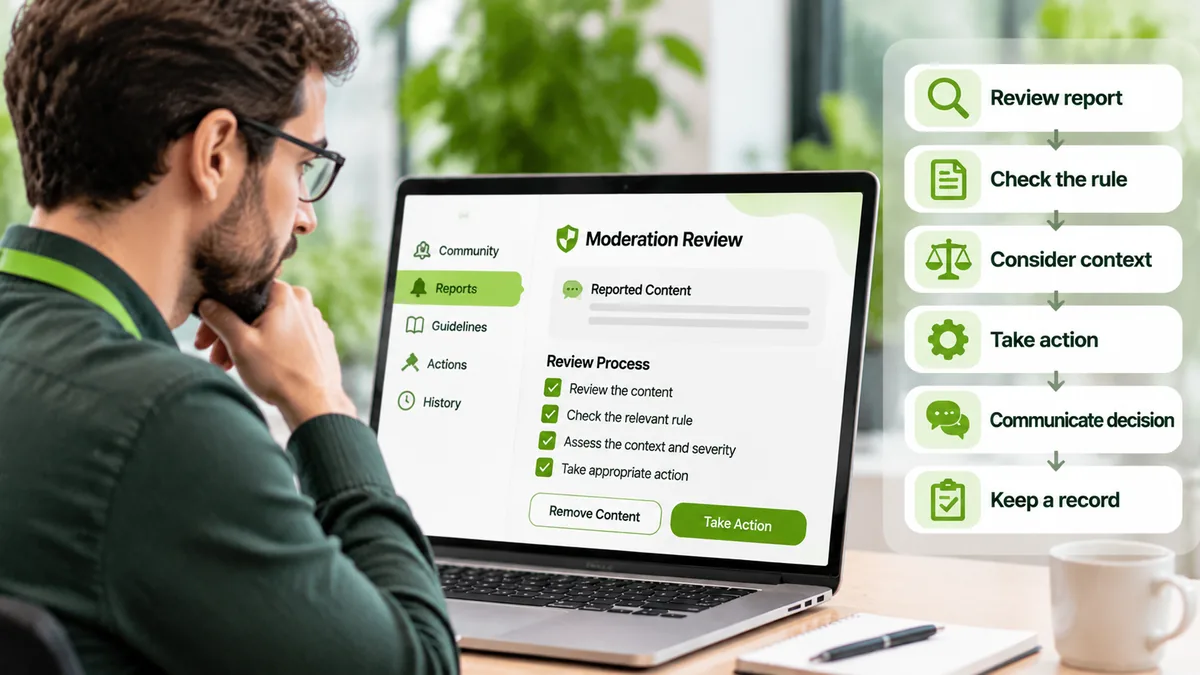
Rules are only useful when they are applied consistently. Moderators should avoid making decisions based on personal preferences or disagreements with individual members.
A practical moderation process may involve:
Reviewing the reported content.
Checking which rule may have been violated.
Considering the context and severity.
Taking an appropriate action.
Communicating the decision when necessary.
Keeping a record of repeated or serious violations.
Possible actions include a reminder, content removal, temporary restrictions, or account suspension. Serious misconduct may require immediate action depending on the situation.
A community app with moderation tools can support this process through reporting features, administrator permissions, and content controls.
Keeping Rules Updated

Community guidelines should evolve as the platform grows. A small professional group may initially need only a few basic rules, while a larger community may require more detailed policies.
Review the guidelines when:
New features or discussion spaces are introduced.
The community begins hosting public events.
Membership grows significantly.
New types of content become common.
Members report recurring problems.
Netwoor focuses on connected digital networking experiences, where clear expectations and relevant interactions can help support a more useful professional environment.
Conclusion
Clear community rules create a foundation for respectful communication, safer participation, and productive discussions. Start with simple guidelines covering behavior, privacy, promotions, and moderation. Introduce them during onboarding, apply them consistently, and review them as the community develops.
FAQs
1. What are online community rules?
They are guidelines that explain how members should communicate and behave within a digital community.
2. How many rules should an online community have?
Start with the essential rules members need to understand. Add more only when specific needs arise.
3. Who should enforce community rules?
Community administrators and moderators are generally responsible for reviewing reports and applying guidelines.
4. Should community rules be updated?
Yes. Review them periodically and whenever the community introduces major changes.
Get the next article in your inbox
Stay updated with practical insights, product updates, and networking tips — delivered straight to your inbox.