

Large conferences and professional gatherings often bring together people with different interests, experiences, and expectations. While keynote presentations provide valuable information, attendees also need opportunities to participate, exchange ideas, and discuss subjects in smaller groups. Well-planned breakout session ideas can make events more interactive and help participants gain practical insights.
These sessions divide attendees into smaller groups to explore specific topics, solve problems, or participate in focused activities.
Why Breakout Sessions Improve Event Engagement?

Large audiences can make direct participation difficult. Some attendees may hesitate to ask questions during presentations, while others may prefer discussing specific topics in smaller groups.
Breakout sessions provide a more comfortable environment for interaction. They can help organisers:
Encourage participation from different attendees.
Explore specialised topics in greater detail.
Support peer-to-peer learning.
Generate ideas and practical solutions.
Create opportunities for professional connections.
Effective breakout session ideas should match the audience's interests and the overall purpose of the event.
12 Creative Breakout Session Ideas
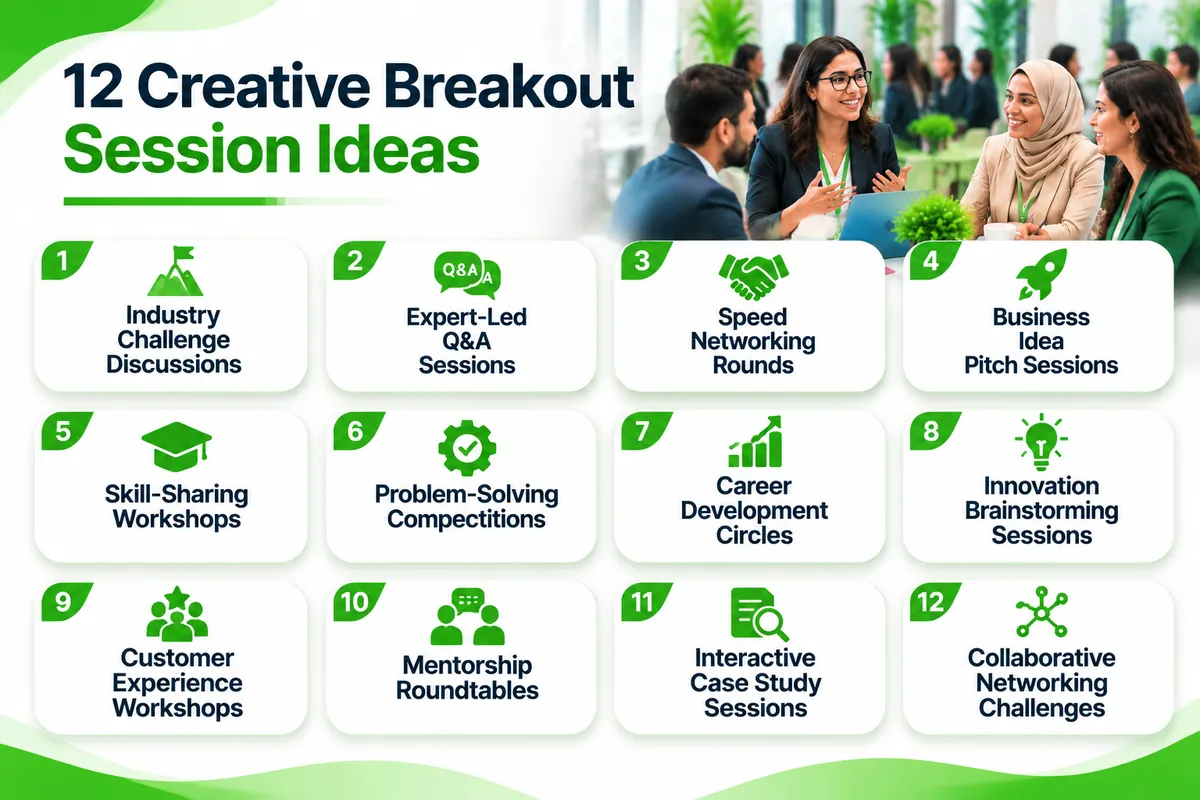
Whether you are organising a corporate conference, educational workshop, business summit, or networking event, the right session format can improve engagement and encourage collaboration.
1. Industry Challenge Discussions
Divide attendees into groups and present each group with a relevant industry challenge. Ask participants to discuss possible solutions and share their recommendations.
This format works particularly well at business and technology conferences.
2. Expert-Led Q&A Sessions
Invite industry specialists to lead small-group discussions. Attendees can ask questions and receive more focused answers than they might during a large keynote session.
3. Speed Networking Rounds
Arrange short conversations between participants, allowing them to meet several professionals within a limited period.
This activity is useful for conferences where building connections is a major objective.
4. Business Idea Pitch Sessions
Give participants a few minutes to introduce a business idea, product, or project.
Other attendees can provide feedback, suggest improvements, and identify possible collaboration opportunities.
5. Skill-Sharing Workshops
Invite professionals to teach a practical skill related to their industry.
Examples include digital marketing techniques, presentation skills, leadership strategies, and productivity tools.
6. Problem-Solving Competitions
Present a realistic business or organisational problem and ask groups to develop solutions.
At the end, participants can present their ideas and explain their approach.
7. Career Development Circles
Create smaller groups focused on career planning, professional development, and workplace challenges.
This format works well for student conferences, professional associations, and employee development events.
8. Innovation Brainstorming Sessions
Ask attendees to explore emerging trends and develop new ideas around a specific subject.
For example, a technology event could focus on how AI may transform customer experiences.
9. Customer Experience Workshops
Bring participants together to examine customer journeys, identify common problems, and recommend improvements.
This activity is useful for marketing, sales, and product development conferences.
10. Mentorship Roundtables
Arrange small groups where experienced professionals can share advice with people at earlier career stages.
A moderator can guide the conversation and ensure participants have an opportunity to ask questions.
11. Interactive Case Study Sessions
Present a real-world or hypothetical business situation and ask participants to evaluate it.
Groups can discuss possible strategies, compare approaches, and explain their recommendations.
12. Collaborative Networking Challenges
Create activities that encourage attendees to find people with specific professional interests or complementary skills.
For example, participants could be asked to identify someone working in a different industry and discuss a possible collaboration.
How to Choose the Right Session Format?
Not every activity works for every audience. Consider the event's purpose, available time, participant numbers, and expected outcomes.
| Event objective | Recommended session |
|---|---|
| Professional connections | Speed networking |
| Practical learning | Skill-sharing workshop |
| Business development | Idea pitch session |
| Innovation | Brainstorming |
| Career growth | Mentorship circles |
| Team collaboration | Problem-solving competition |
For larger events, combine different formats to accommodate different learning and communication preferences.
Tips for Managing Successful Breakout Sessions
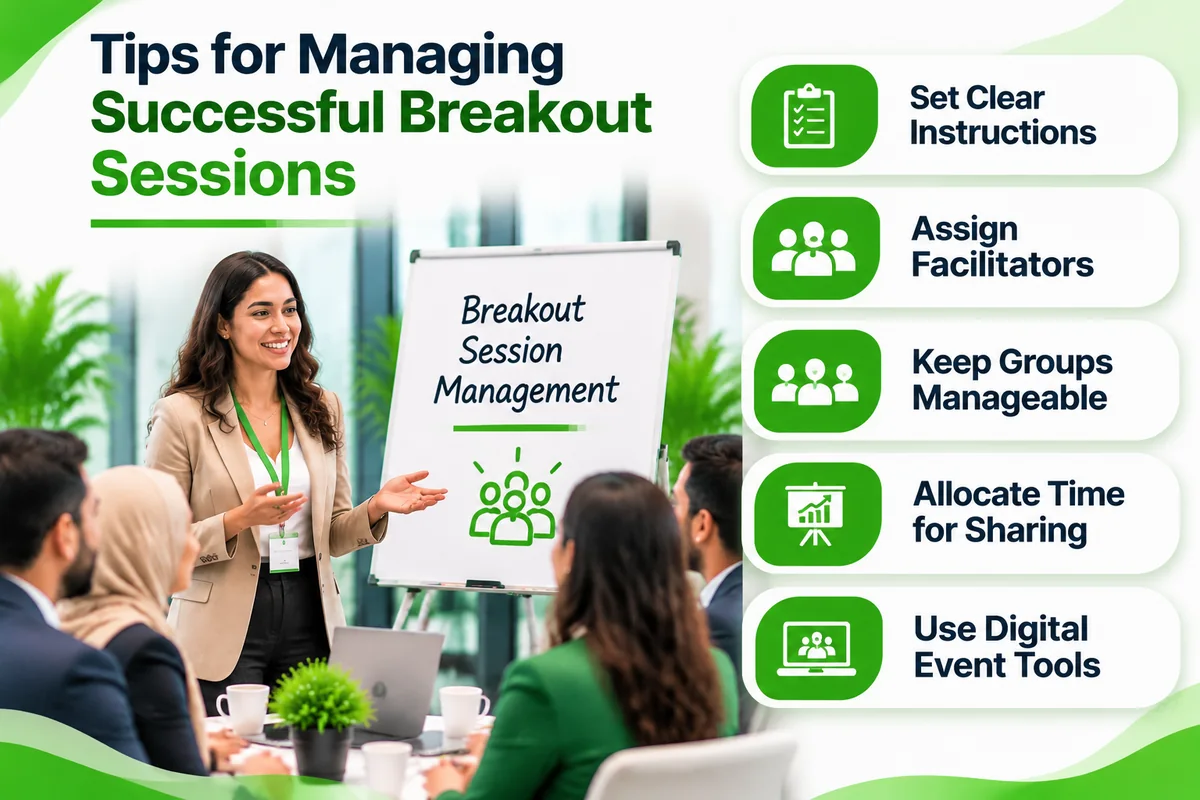
Set Clear Instructions
Explain the objective, activity, expected output, and available time before participants enter their groups.
Assign Facilitators
A facilitator can guide conversations, encourage participation, and prevent discussions from moving away from the topic.
Keep Groups Manageable
Smaller groups generally provide more opportunities for individual contributions. Choose group sizes according to the activity.
Allocate Time for Sharing
Allow each group to present its findings or recommendations after the session.
Use Digital Event Tools
An event networking platform can help attendees discover participants with relevant interests and organise follow-up conversations.
Netwoor AI helps event organisers and attendees make more relevant professional connections through AI-powered networking and matching.
How to Measure Session Effectiveness?
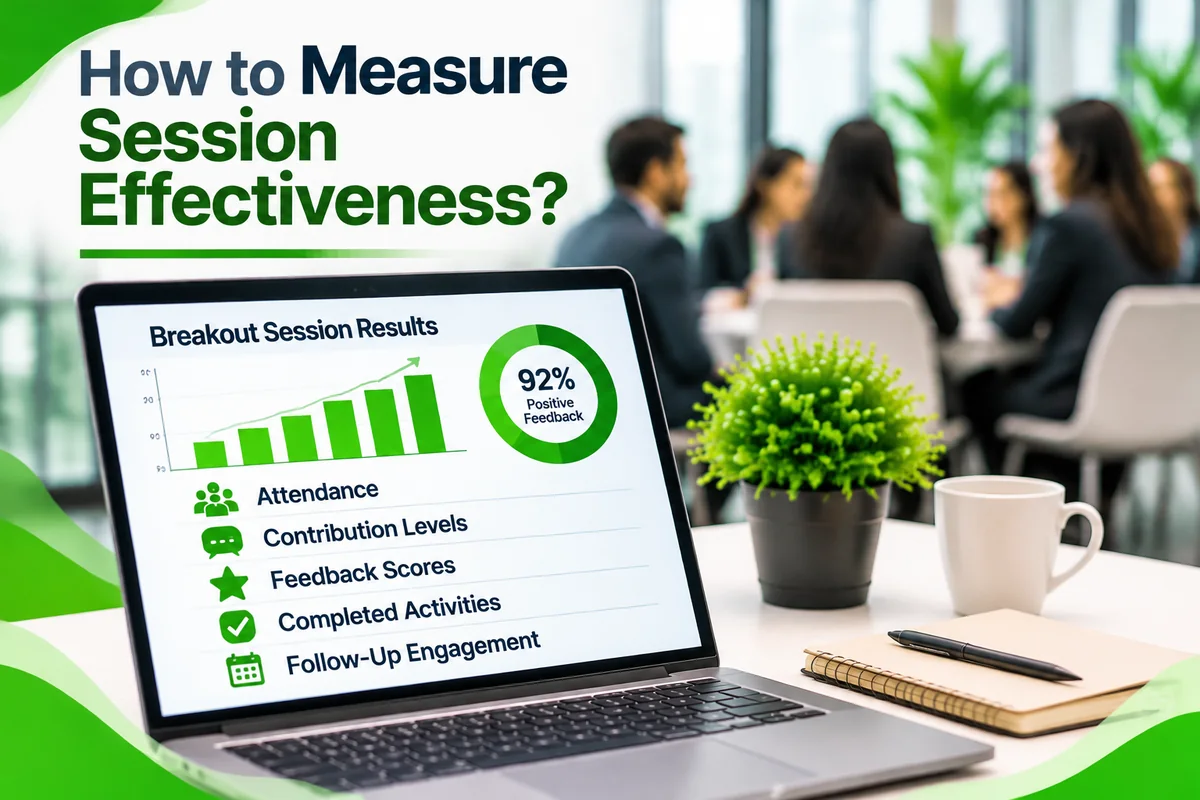
Event organisers should assess whether breakout activities achieved their intended purpose.
Useful indicators include participant attendance, contribution levels, feedback scores, completed activities, and follow-up engagement. Collecting short feedback forms after sessions can also help identify which formats participants found most valuable.
Common Mistakes to Avoid
Avoid overcrowding groups, providing unclear instructions, and scheduling too many activities without sufficient breaks.
Another mistake is selecting activities that have little connection with the event's overall theme. Every session should provide a clear benefit to participants.
Conclusion
Breakout sessions can transform traditional conferences into more engaging and collaborative experiences. From expert discussions and mentorship circles to business challenges and interactive networking, the right activities encourage attendees to participate actively.
By choosing suitable formats, providing clear instructions, and evaluating outcomes, organisers can create sessions that deliver practical value beyond the main event programme.
FAQs
1. How long should a breakout session last?
Most sessions can run for 20 to 45 minutes, depending on the activity.
2. How many people should be in a breakout group?
Groups of four to eight participants can work well for many interactive activities.
3. Who should facilitate breakout sessions?
Event moderators, subject experts, team leaders, or trained facilitators can guide discussions.
4. Can breakout sessions be conducted virtually?
Yes. Video conferencing platforms commonly offer separate rooms for smaller group activities.
Get the next article in your inbox
Stay updated with practical insights, product updates, and networking tips — delivered straight to your inbox.