

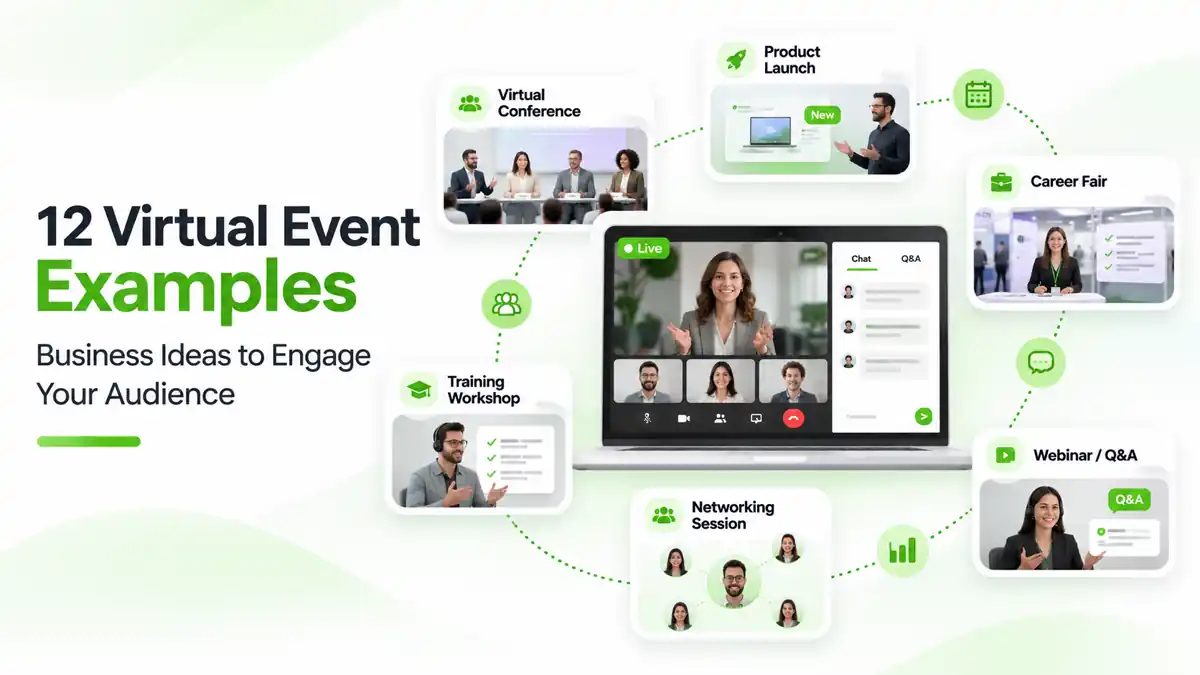
Virtual events have become a practical way for businesses, educational institutions, and professional communities to bring people together. They allow organisers to share information, introduce products, provide training, and create opportunities for interaction without requiring attendees to travel.
However, not every online event needs to follow the traditional webinar format. Exploring different virtual event examples can help organisers choose an experience that matches their audience and objectives.
12 Practical Virtual Event Examples
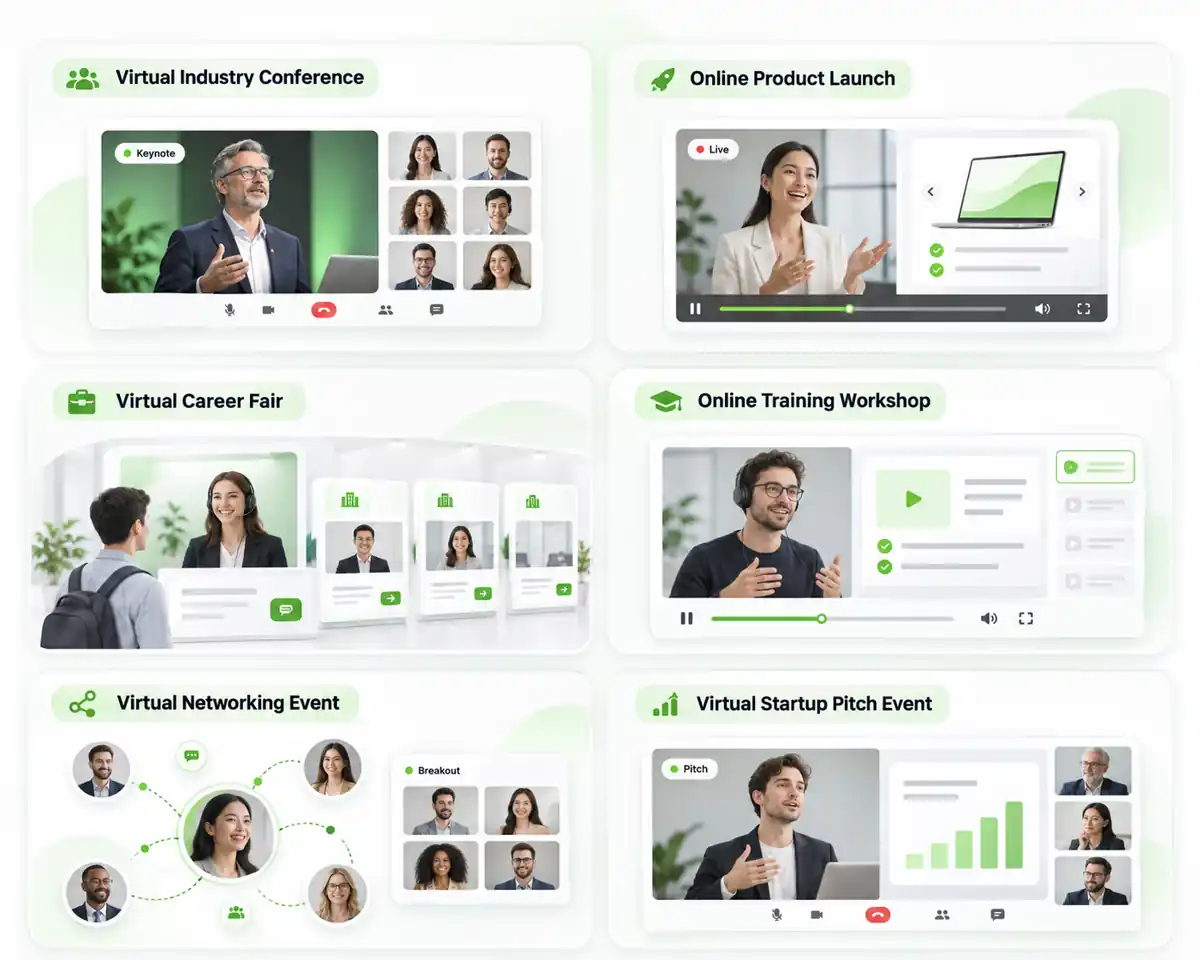
1. Virtual Industry Conferences
An online industry conference brings together speakers, professionals, sponsors, and attendees around a shared subject. It may include keynote presentations, panel discussions, workshops, and networking sessions.
2. Online Product Launches
Businesses can introduce new products through live demonstrations, presentations, and audience Q&A sessions. Attendees can learn about features and ask questions directly.
3. Virtual Career Fairs
Employers and job seekers can interact through online recruitment booths, presentations, and scheduled conversations. This format can help organisations reach candidates in different locations.
4. Online Training Workshops
Training sessions provide practical instruction in subjects such as leadership, communication, technology, and professional development. Interactive exercises can make these sessions more useful.
5. Virtual Networking Events
These events bring professionals together through online introductions, breakout rooms, and scheduled meetings. They are particularly useful when participants want to meet people in the same industry.
6. Online Panel Discussions
A moderator invites several experts to discuss a topic from different perspectives. Attendees can submit questions and participate in the discussion.
7. Virtual Trade Shows
Businesses can present products and services through digital exhibitor spaces, demonstrations, downloadable resources, and scheduled meetings.
8. Online Fundraising Events
Nonprofits can organise virtual fundraising campaigns, charity auctions, awareness sessions, and donor presentations.
9. Virtual Award Ceremonies
Organisations can recognise employees, partners, customers, and community members through online award presentations.
10. Online Educational Events
Schools, universities, and training organisations can host virtual lectures, student orientation sessions, expert talks, and academic workshops.
11. Virtual Wellness Activities
Online fitness classes, mindfulness sessions, and workplace wellbeing discussions can encourage employees and communities to participate in healthy activities.
12. Virtual Startup Pitch Events
Entrepreneurs can present business ideas to investors, mentors, and industry experts. Organisers can schedule presentations and follow-up meetings to encourage meaningful discussions.
What Makes a Virtual Event Successful?
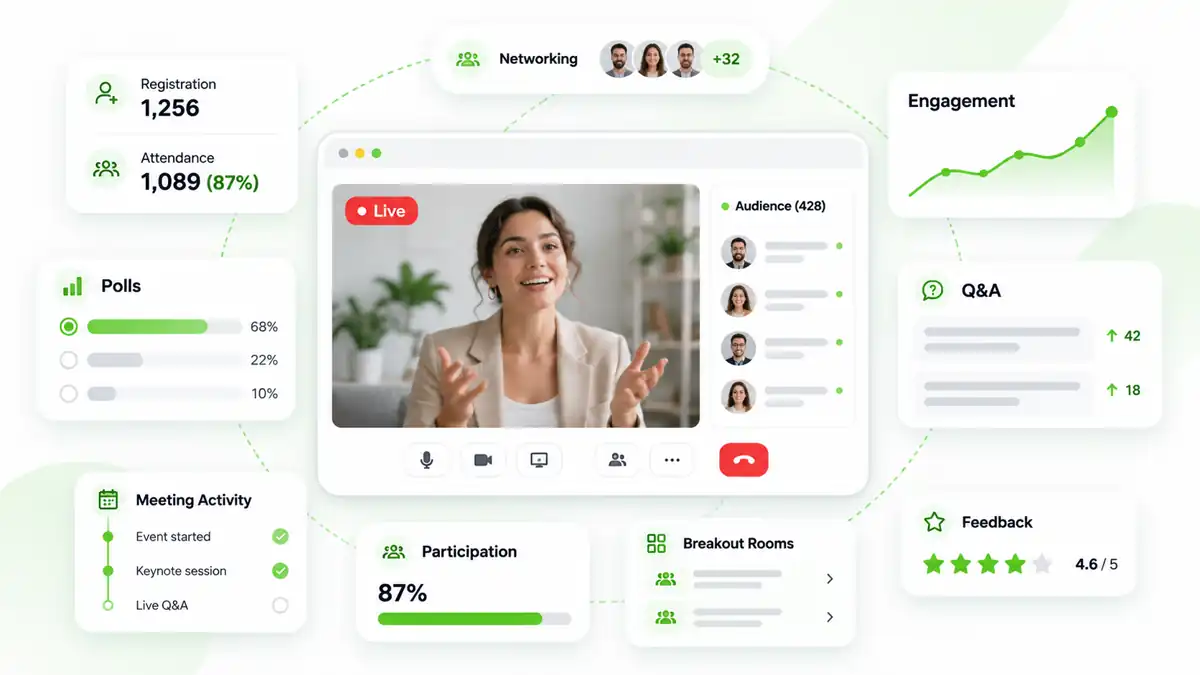
Looking at different virtual event examples is a useful starting point, but organisers also need to consider how the experience will work for attendees.
First, establish a clear objective. A product launch requires a different structure from a professional networking event. Next, choose a platform that supports your format, audience size, and required features.
You should also plan audience participation. Include live polls, Q&A sessions, discussion rooms, quizzes, or scheduled meetings where appropriate.
Finally, make the event easy to access. Share joining instructions in advance, test audio and video, and provide support for attendees who experience technical difficulties.
How to Encourage Networking During Virtual Events
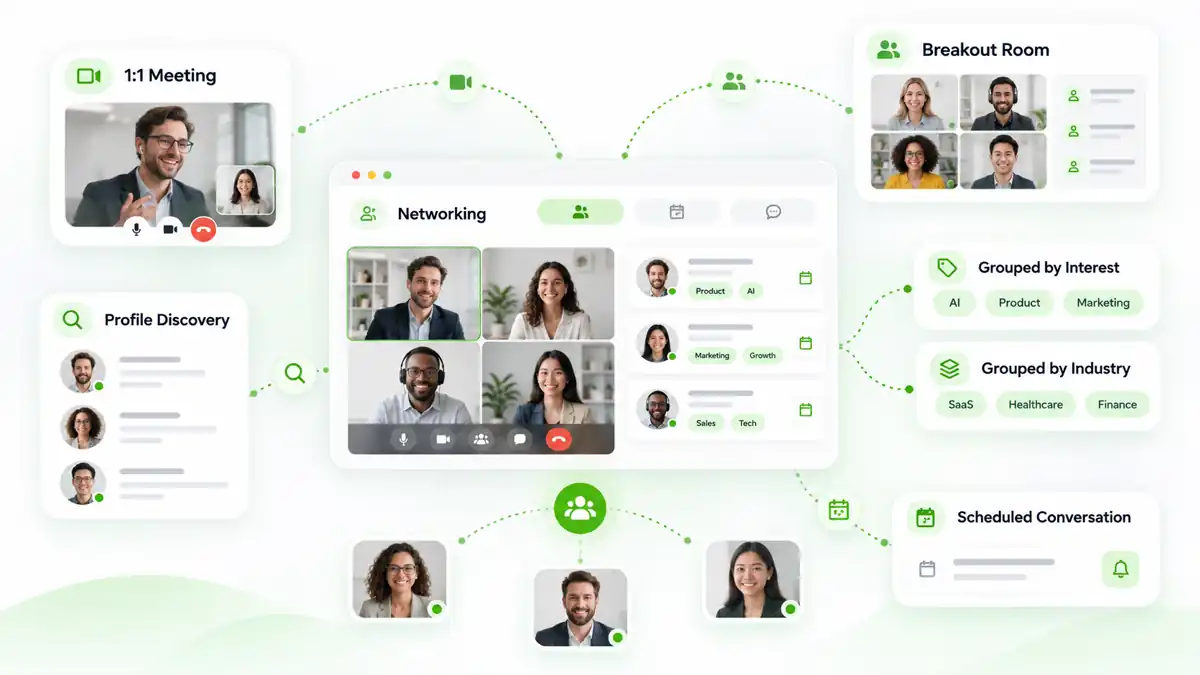
Online events can sometimes feel less personal than physical gatherings. Organisers can address this by creating dedicated networking opportunities.
For example, attendees can be grouped by industry, professional interests, or business goals. Short introductory sessions can help participants start conversations, while scheduled one-to-one meetings allow them to explore potential collaborations.
Netwoor AI can support professional discovery by helping event participants identify relevant people to connect with.
Conclusion
These virtual event examples demonstrate that online events can serve many purposes, from education and recruitment to business development and networking. The most suitable format depends on your audience, event objectives, and available resources. Prioritise participation and make it easy for attendees to gain value from the experience.
Frequently Asked Questions
1. What is the most common type of virtual event?
Webinars, online conferences, workshops, and virtual meetings are widely used formats.
2. Can virtual events generate business leads?
Yes. Product demonstrations, industry conferences, and virtual trade shows can create opportunities to engage potential customers.
3. Do virtual events need live speakers?
No. Some events use pre-recorded sessions, although live interaction can make the experience more engaging.
4. How can organisers measure virtual event success?
They can review registrations, attendance, participation, meeting activity, feedback, and post-event conversions.
Get the next article in your inbox
Stay updated with practical insights, product updates, and networking tips — delivered straight to your inbox.